Holy Crab!
Crab lover alert. If you want to enjoy flower crabs to the fullest, these tips were made for you.
When you visit Koh Samui, you’ll discover a world of vibrant markets and incredible seafood, and one of the true stars of this culinary scene is the flower crab (known locally as poo mah). These beautiful creatures are found all along Thailand’s coast, from the calm waters of the Gulf of Thailand to the buzzing shores of the Andaman Sea. They are an essential part of the local fishing industry, especially loved for their naturally sweet meat.
Why are they so special? Flower crabs are full of protein, calcium, and omega-3 fatty acids which makes them a popular choice with healthy eaters and can be found at any local seafood restaurant.
However, with their popularity comes a responsibility to protect them. Overfishing has become a concern, with a rising number of small crabs and egg-bearing females being caught. That’s why you’ll see local initiatives like the flower crab bank on Samui island run by local fishermen who collect female crabs with eggs and help them reproduce in a protected environment before releasing the young crabs back into the sea. This effort ensures that future generations can continue to enjoy this valuable resource.
How to choose the best crab
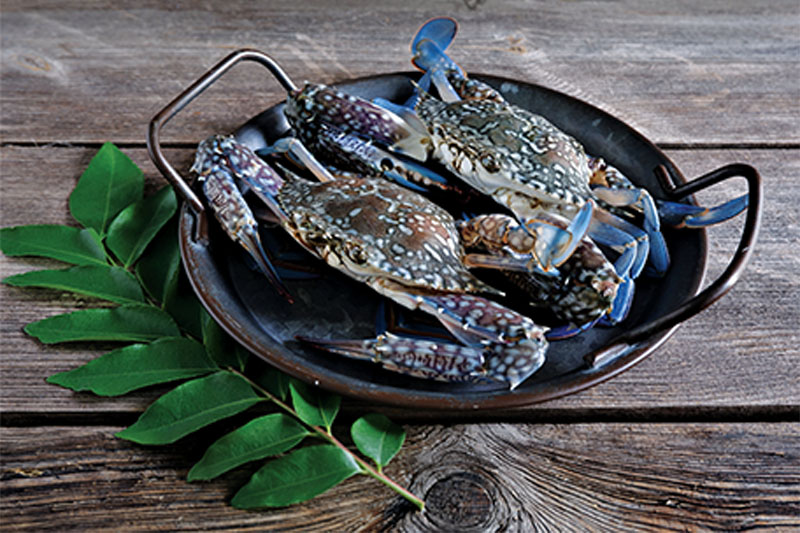
For a truly authentic experience, head to a local market and choose your own crab. Look for one that is strong and active, with clear eyes and all its legs and claws intact. A fresh crab will have a clean, oceanic smell, not a pungent or foul odour. For a meaty crab, choose a male with large claws. If you prefer roe, a female crab is the way to go. You can easily tell them apart by their blue-green shells (males) or brownish colour (females).
Peak Season: Adult crabs are at their best from March to May.
The Gulf’s crystalline waters and a rich marine diet have ushered in a prime season for the flower crab. Yet, for the truest expression of the delicacy, the discerning eye should seek out the male. Loved for heftier claws and significantly sweeter meat, it is easily identified by the sharp, pointed shape of its abdomen—distinct from the rounded curve of the female. It is a subtle inspection, but one that guarantees a superior lunch.
The Sauce That Steals the Show
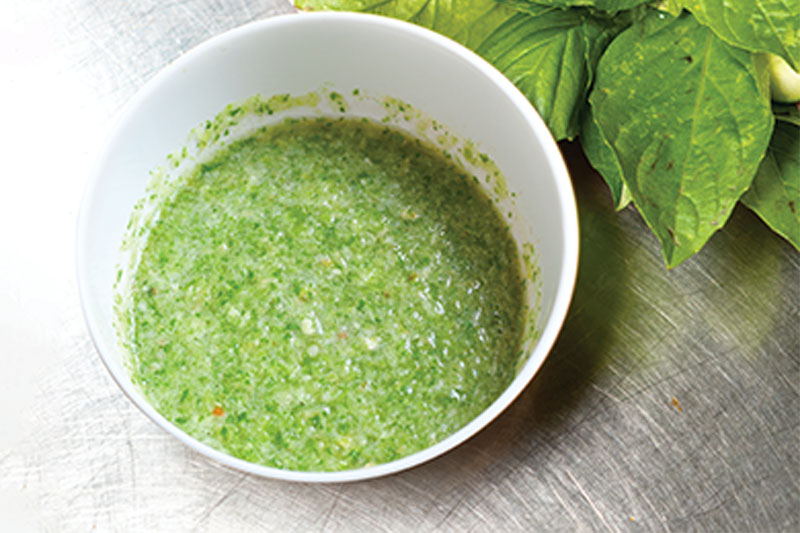
In Thailand, seafood is rarely served alone. This lime- bright, chilli-laced sauce — pounded by hand and layered with sugar and fish sauce — proves that the right accompaniment can be the main event.
This is the sort of sauce that doesn’t just accompany seafood but animates it. Sharp with lime, aromatic with coriander root and garlic, and balanced by layers of sugar and fish sauce, this seafood sauce or namjim seafood is a condiment that truly understands contrast the Thai way.
It’s a little hot, a little sweet, and insistently fragrant. The best part about this recipe is that the mortar does most of the work! All you have to do is trust it.
Ingredients:
To pound first
- Coriander roots – 4-5, washed and scraped clean
- Red chillies – 5
- Green chillies – 5
- Garlic cloves – 10
- White pepper – to taste
- Salt – ½ teaspoon
To add for balance and fragrance
- Fresh lime juice – about 3 ladies (or generous tablespoons)
- Cooking vinegar – 1 ladle (optional, to extend shelf life)
- Palm sugar – 2 tablespoons
- White sugar – 1 tablespoon
- Brown sugar – 1 tablespoon
- Fisb sauce – 1-3 tablespoons, to taste
Instructions
Begin, as all good things do, with a mortar and pestle — because this sauce needs bruising, not blending. Drop in the coriander roots, chillies, garlic, pepper and salt, and pound patiently. The aim is not speed but surrender, so that you can smell the ingredients softening, yielding, releasing their oils until the aroma rises up and meets you halfway.
Now comes the moment that transforms everything. Pour in the fresh lime juice — not timidly, but generously. This is what wakes the paste, what lifts the heat and coaxes out that unmistakable citrus fragrance. If you’re planning to keep the sauce for more than a day or two, add a ladle of cooking vinegar here — practical, yes, but it also deepens the acidity in a pleasing way.
Sprinkle in the palm sugar, followed by the white and brown sugars. This combination is a Thai favourite: palm sugar for its round, almost smoky warmth; white sugar for clarity; brown sugar for depth. Stir and mash until everything dissolves into a glossy, amber-flecked paste.
Finally, add the fish sauce — start with one tablespoon and taste. Add more if you crave saltiness or depth. Adjust with extra lime, sugar, or even another pinch of chilli.
Spoon generously over grilled prawns, steamed crab if you prefer, but the Thai way of enjoying this is simply use it as a dipping sauce — and watch how something so simple makes everything else taste more itself.