Water for Life
With World Water Day observed globally and Thailand readying itself for Songkran, the water-soaked Thai New Year, water emerges as both a source of joy and a measure of how we care for the world ahead.
Words: Mimi Grachangnetara
Photography: Shutterstock
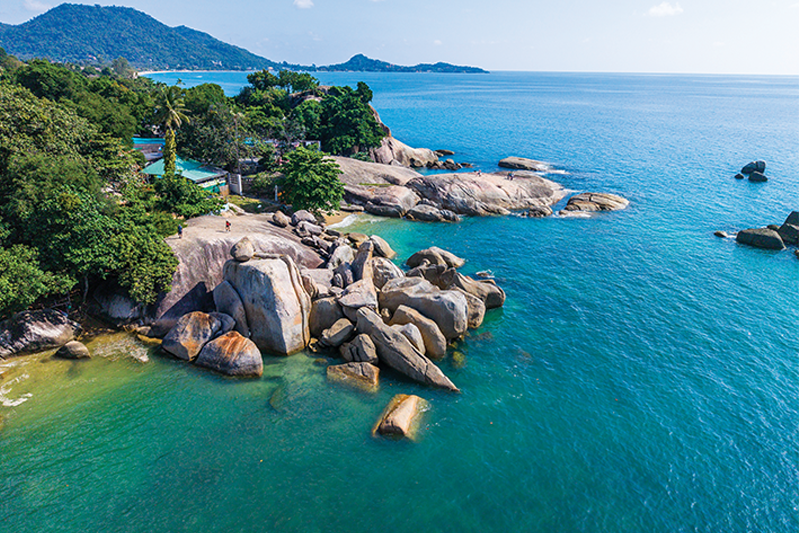
On Koh Samui, the presence of water is everywhere, but it often makes its presence felt before it is fully seen. Arriving as a hush along the shore, beading on frangipani leaves, gathering in the hollows of coconut husks, and slipping quietly into the sand, it has been a constant companion for people and wildlife for generations.
Before the pipes and pumps came, it was water that shaped where we settled, grew and how we learned to live together. Rivers were our first roads while monsoons were our first calendars. Even now, in an age of abundance that feels permanent but is not, water remains the measure of civilisation. How we treat it says everything about who we are.
World Water Day on March 22 invites us to pause and remember this truth, asking us to think not only about access and infrastructure—essential as they are— but about intimacy, too: our daily, largely unconscious relationship with water. The small, overlooked moments matter, whether it’s a long shower after the beach, a towel used just once, or a glass topped up while still half full. These habits are so familiar they barely register, yet they deserve intention and in places of beauty like Samui, where water appears abundant and ever-present, it is especially easy to forget just how fragile that relationship has become.
Islands understand limits better than continents. While Samui’s aquifers are finite, rainfall is generous, but irregular, tourism brings livelihoods, ideas and exchange, but also thirst. Five-star hotels, infinity pools, lush gardens and fresh linens are modern miracles of comfort, yet each relies on careful stewardship. Luxury, today, is not excess, but restraint done beautifully.
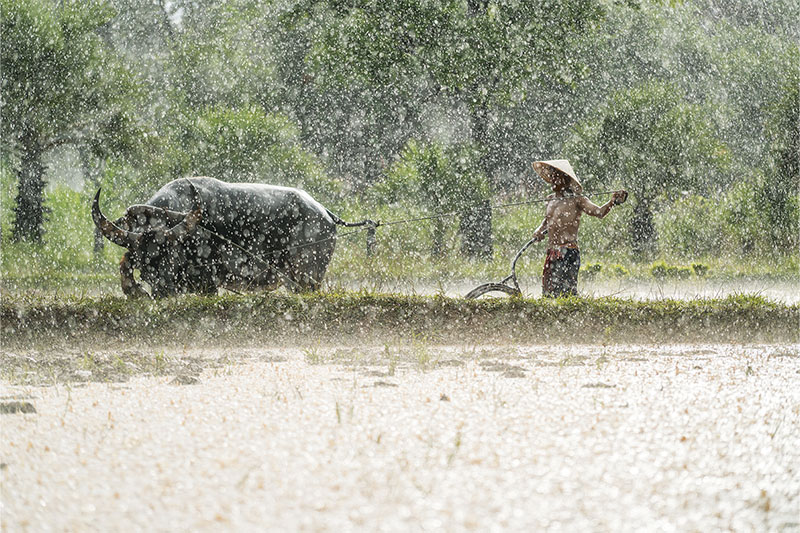
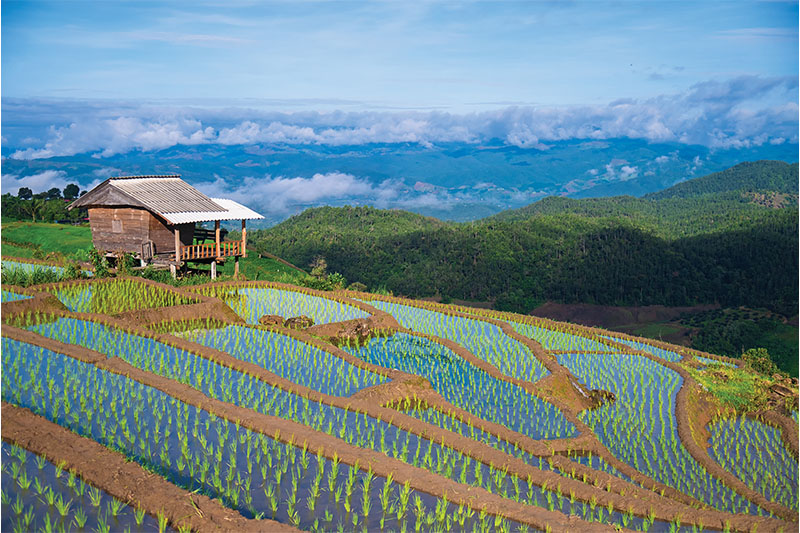
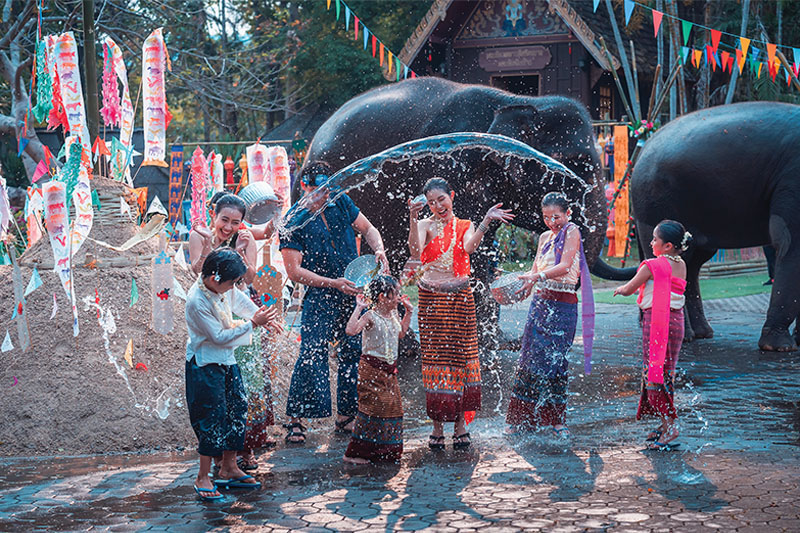
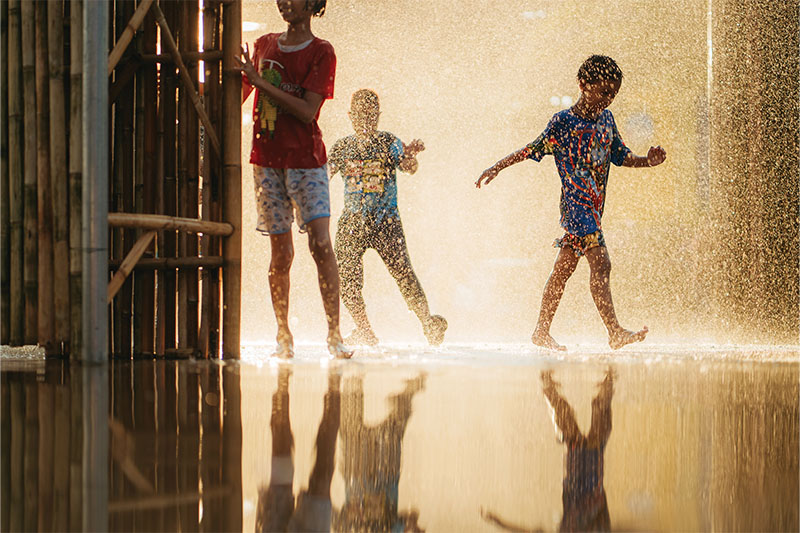
In Thailand, water is sacred, flowing through stories and ceremonies, through the graceful geometry of rice fields and the patient engineering of canals. In April, this is especially true when Songkran arrives, bright and joyful, marking the Thai New Year. Water is poured gently over elders’ hands, a blessing of renewal and respect. Only later did the festival swell into exuberant street celebrations filled with laughter, splashing and water guns that briefly turn cities into rivers.
There is no need to lose that joy, but there is wisdom in remembering the original intention. Celebrating Songkran the Thai way is honouring water as a gift rather than a toy. This year, as the heat deepens and the rains hesitate, restraint becomes an act of reverence and a moment where celebration and conservation can become partners.
As travellers, we tend to forget that fresh water makes up only a tiny fraction of what exists on Earth; that aquifers take decades to recharge, and that coral reefs depend on clean runoff. We forget that climate change does not announce itself with drama, but with subtle shifts: a dry season a little longer, a storm that much heavier.
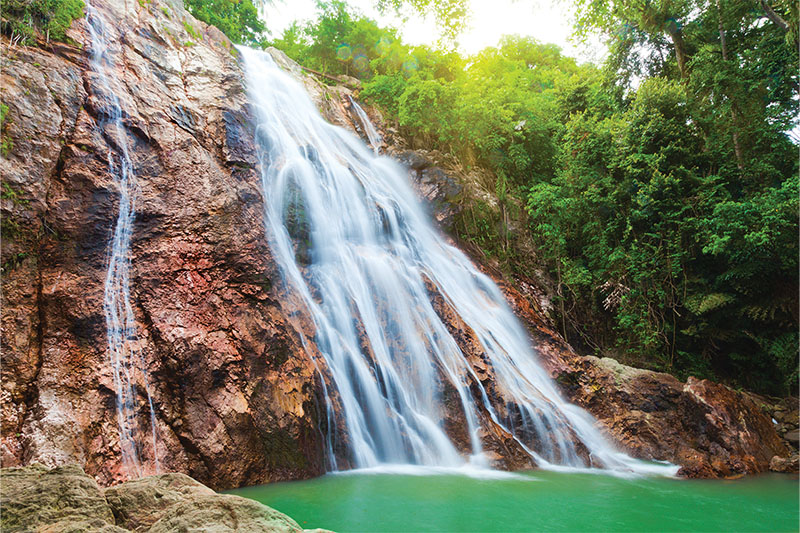
And yet, remembering is surprisingly easy. It begins with attention. Next time you turn on the tap, just notice how water disappears quickly when left running, and how satisfying it is when turned off with purpose. Notice how much you truly need. Notice how often less is enough.
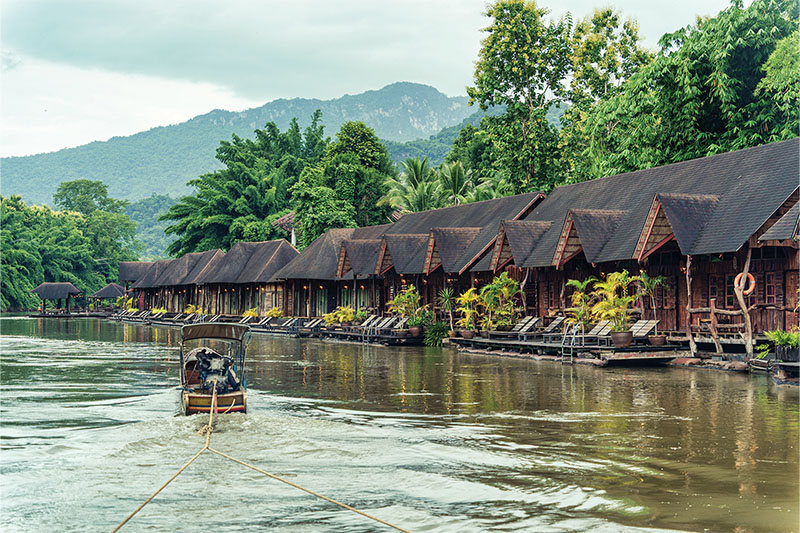
Hotels across Samui are uniquely placed to lead this quiet revolution. A card by the sink that explains reuse as contribution rather than sacrifice. Landscapes designed with native plants that thrive on rain rather than demand irrigation, pools maintained with care and chemistry rather than constant replacement and guests who understand that mindful use is not a downgrade in comfort, but an upgrade in conscience.
For travellers, too, water awareness can be woven gently into the stay. Shorter showers or towels reused without a second thought. Choosing experiences that honour water rather than consume it is a good start. Enjoy a paddle at sunrise instead of an island excursion on a longtail boat; a mangrove walk that reveals how roots filter and protect; a simple swim in the sea, where salt reminds us why fresh water matters.
If we take the time to think about how water connects everything, we might be able to make wiser decisions. That glass on your bedside table is linked to clouds over the Gulf of Thailand. The shower after Songkran is linked to farmers inland watching the sky. The ice in your drink carries the memory of a reservoir, a pipe, a pump, a decision made somewhere to prioritise supply over waste. We often speak of saving water, as though it were something fragile we carry in our pockets, but in truth, water saves us daily. Our task is not heroism, but humility. To take only what we need and to give thanks in small, consistent ways.
As the March–June season unfolds, as World Water Day reminds us and Songkran invites renewal, there is an opportunity here on Samui to model a future that is both elegant and responsible. Water has carried us this far. The least we can do is carry it, carefully, into what comes next.