Hope Floats
If you’re visiting Samui during April or May, ask a local about Loy Kroh. You may be led not to a beach club or spa, but to the shoreline itself—where one of Thailand’s most quietly moving rituals unfolds, and where misfortune is set gently adrift.
Words: Mimi Grachangnetara
Photos: Tourism Authority of Thailand & Bella Luna
Loy Kroh is an ancient ritual that has long been woven into the cultural fabric of southern Thailand. To witness this ritual on Koh Samui is to step back in time, for it’s a rare, surviving piece of the island’s cultural soul that shows us how early coastal communities made sense of their world, terating illness and bad luck as a delicate dance between nature and the divine.
Translated as “floating away misfortune,” Loy Kroh is a ritual that reflects centuries of cultural exchange, drawing heavily from Brahmanic (Hindu) beliefs from ancient India, and later blending seamlessly with Buddhist practices as Buddhism spread into the region.
Historical records suggest that Buddhism entered what is now Thailand through the south, particulalry through Nakhon Si Thammarat, once known as Tambralinga. This powerful port city became one of the earliest centres of Buddhist learning in the region. Along with religious teachings came Indian customs, cosmology, and ritual practices-many of which still linger in Thai life today.
As Buddhism and Brahmanism intertwined, it became difficult to separate where one belief system ended and the other began. Everyday Thai rituals-weddings, funerals, house blessings, spirit worship-absorbed elements of both traditions. Loy Kroh is one such ritual, and it’s Brahmanic in origin, Buddhist in expression, and deeply local in character.
In Brahmanic belief, kroh refers to misfortune or harmful influences that obstruct life. Buddhism uses a similar concept called upatthava, meaning obstacles, suffering, or defilement that cloud the mind and disrupt harmony.
Rather than viewing misfortune as something abstract or psychological, traditional belief treats it as a real force—something that can attach itself to a person, a household, or even an entire village. Illness, accidents, failed crops, conflict, and emotional distress were all signs that kroh had settled in. The solution? Definitely not confrontation, but more about release.
Buidling a Boat for Bad Luck
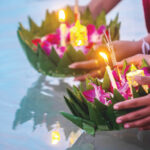
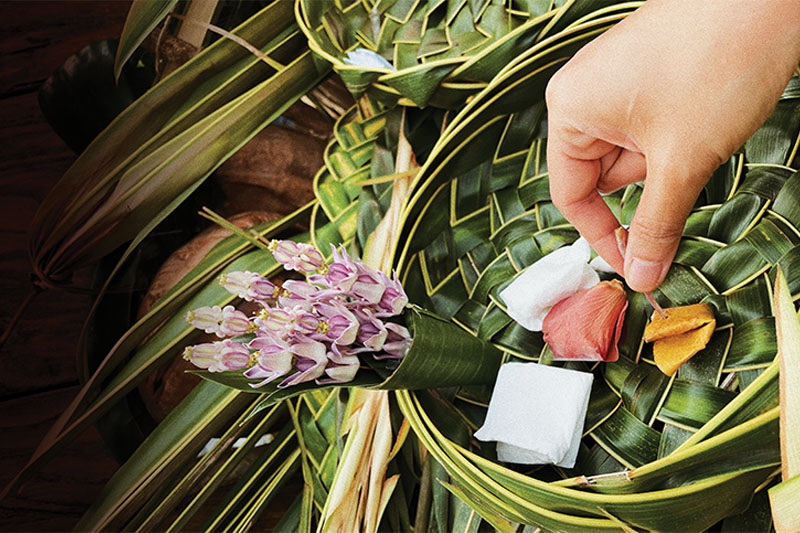
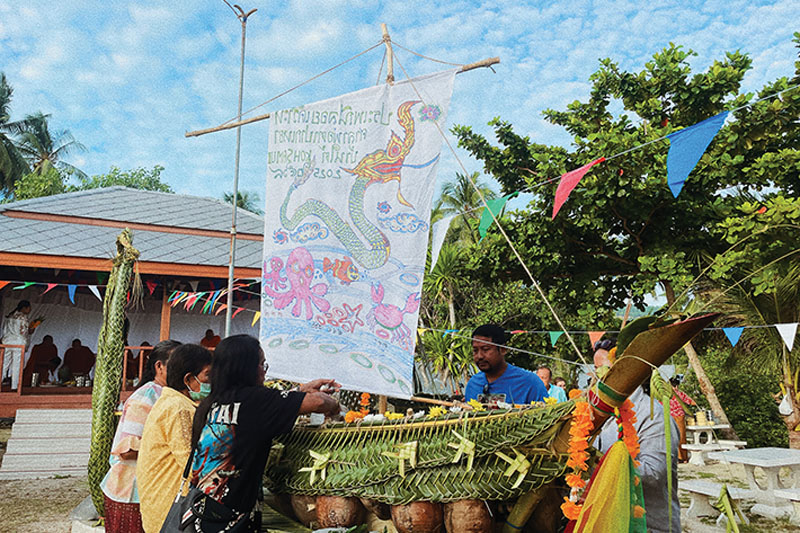
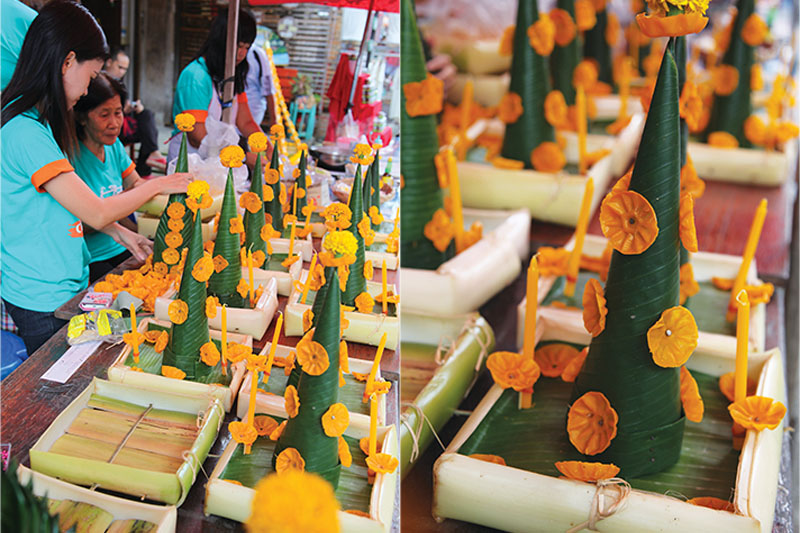
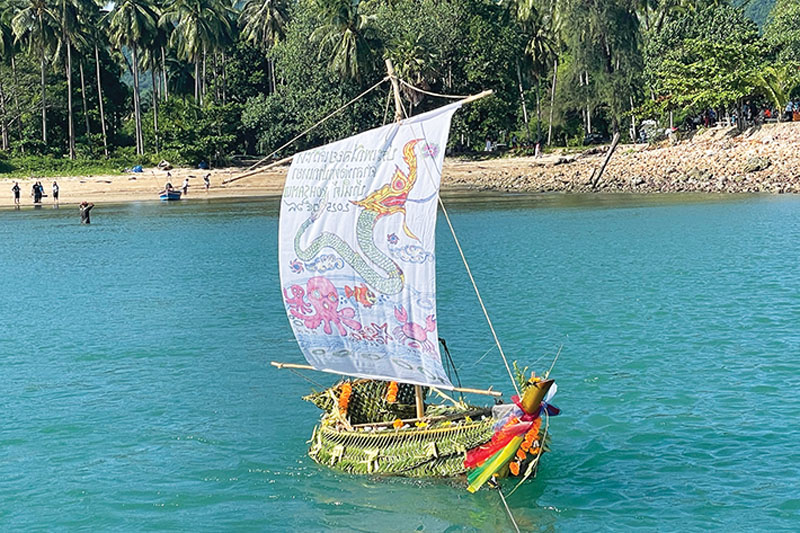
The kroh boat lies at the heart of this tradition-a small ceremonial vesel carefully constructed from natural materials such as bamboo and coconut leaves. A coconut often forms the base, symbolising stability and life. A small rudder guides the boat’s symbolic journey away from shore.
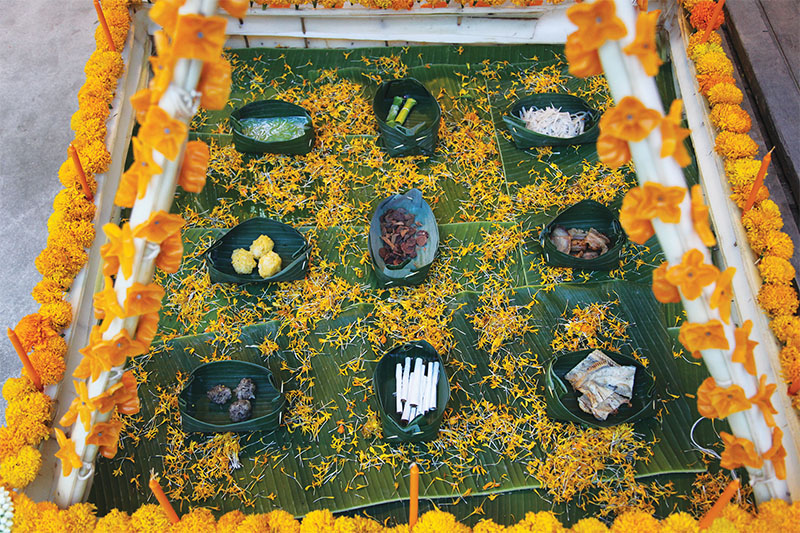
Inside the boat are items representing misfortune: strands of hair and fingernail clippings, uncooked rice, chilies and garlic, and offerings of sweet and savoury food. These objects are not random. Hair and nails represent the body; rice represents sustenance; chilies and garlic are believed to repel harmful forces. Together, they act as stand-ins for everythign the participant wishes to release-illness, grief, fear, bad luck, and lingering sorrow.
Before the boat touches the water, Buddhist monks chant prayers, blessing the ritual and reinforcing the intention to cleanse and protect. While the ritual’s roots are Brahmanic, Buddhism provides its spiritual framework today, emphasising compassion, mindfulness, and renewal.
Loy Kroh is traditionally performed during the dry season, usually in April or May, when seas are calm and travel is safe. On Koh Samui, ceremonies were held near the shore, close enough for the village to gather as one. The sea plays a central role as a living force capable of carrying away human burdens on this occasion. Water, in many cultures, symbolises purification and transition. In Loy Kroh, the sea becomes a boundary between suffering and release.
Once the kroh boat is set afloat, participants are instructed not to look back. To turn around is to risk calling misfortune back into one’s life. Likewise, picking up another person’s boat is strictly forbidden-it would mean taking on their burden instead. As the boat drifts farther away, it carries with it a quiet promise: that life can begin again, lighter than before.
Every village that practiced Loy Kroh maintained as the Sala Por Ta. This structure was believed to house the guardian spirit of the community-a protective presence ensuring peace, safety, and balance. By floating away misfortune together, villagers reinforced social bonds and shared responsibility for one another’s well-being.
A Tradition at Risk of Disappearing
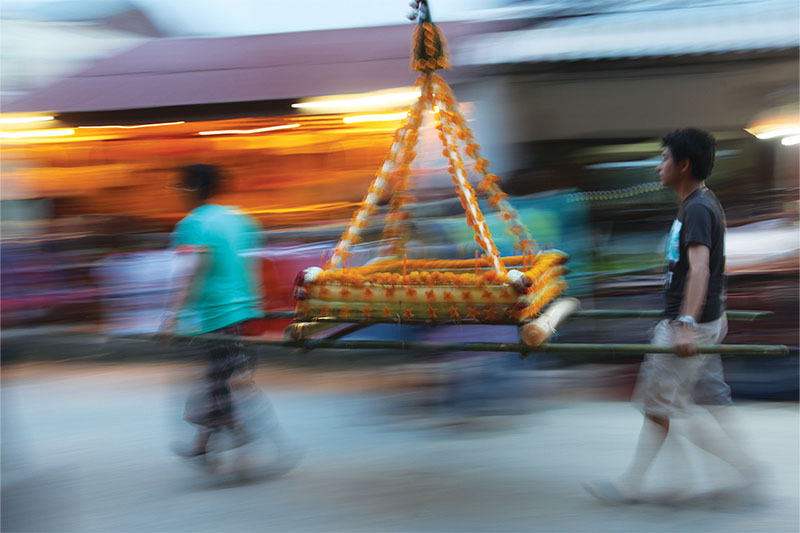
Today, modern life, urban development, and changing belief systems have pushed the ritual to the margins. While merit-making ceremonies at homes or guardian shrines still continue, the full Loy kroh ceremony survives only in Mae Nam Sub-district, and even there, on a small scale.
Its decline is not unusual. Across the world, rituals tied closely to nature and oral tradition are often the first to fade as societies modernise. Yet with their disappearance goes something irreplaceable: a way of understanding life that values balance over control, release over resistance.
In an age defined by speed, certainty, and constant connection, Loy kroh offers a strikingly different worldview, reminding us that misfortune is not always something to fight—but something to acknowledge, honour, and when the time is right, let float gently away.