Designed by Nature
How a Samui local is turning a once-troubled landscape into a quiet blueprint for sustainable living
Words: Sky Fitzgerald
Photos: Bella Luna
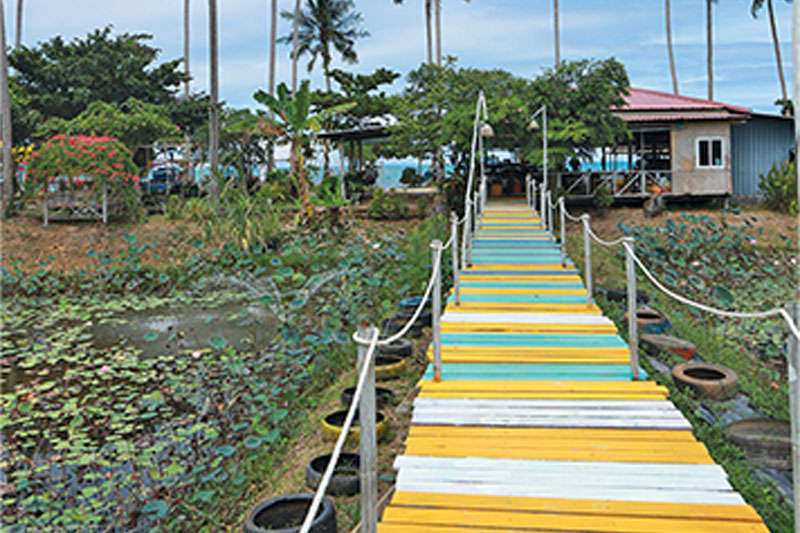
By the time the sun begins its languid descent over Khao Pa Na Lay (Hills Forest Field Sea) – a laid-back stretch of Samui framed by water and trees, lined with hand-crafted sculptures along a wooden walkway, and softened by a gentle sea breeze – the scene feels almost intentionally composed. As though a careful hand has arranged each element. In many ways, one has.
That hand belongs to Chatchawat Wongto, the quietly driven architect-turned-custodian behind one of Samui’s most compelling experiments in sustainable tourism. Khao Pa Na Lay – a pocket of land that folds mountains into forest, forest into paddyfield into sea – is both a retreat and a reflection of its maker’s philosophy: that people heal best when nature is allowed to embrace them fully, not partially or performatively.
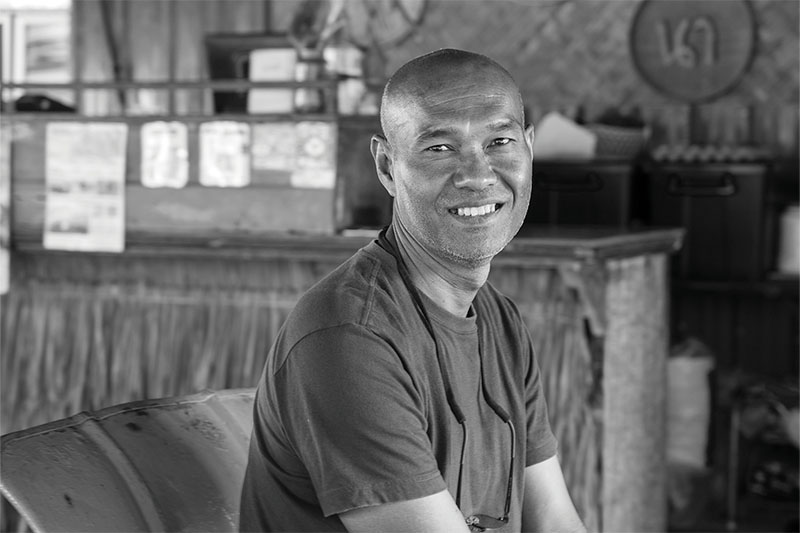
“It started after COVID,” Chatchawat tells us. “Back then, everything paused. I wanted to do something that could stay meaningful after the world re-opened. And I thought, visitors don’t come to Samui for buildings. They come for nature.”
Before the cocktail shakers or the shoreline bar, before the art installations of driftwood and sea-worn rope, there were paddyfields. “Every rainy season, the floods came,” he says. “Almost every year the rice died. Everything washed over this basin. And in the dry season, the total opposite happened – the pond dried out and the fish died too.”
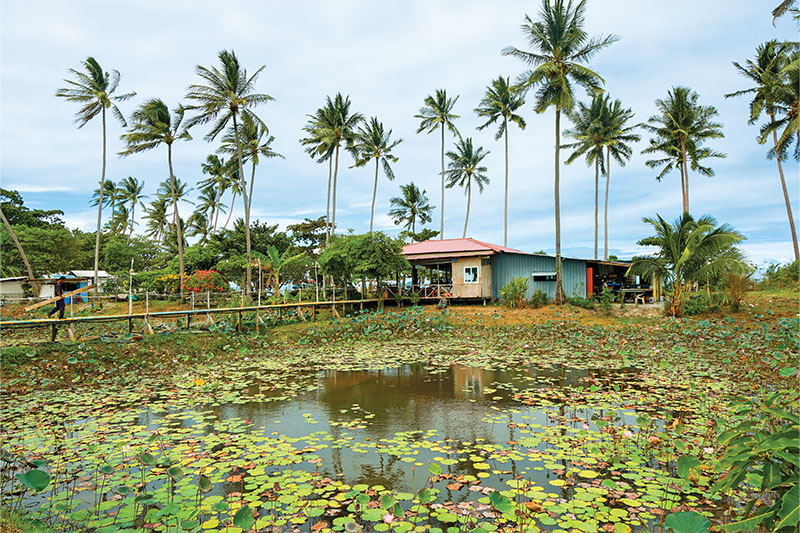
It was a cycle that made no economic or ecological sense. So he reversed couses. Instead of fighting the water, he designed for it. The paddyfields became a vast lotus pond, engineered to store water in the low season and withstand the deluge when the rains return. Mountains feed it, the forest shades it, and the sea completes the equation.
“I wanted this place to be a model for sustainable tourism,” Chatchawat says. “But it takes money, time, patience. People think sustainability is just a label, but it’s really a lifestyle — it’s constant work.”
His accommodations nearby are intentionally understated: wood, soft concrete, shade, airflow. Everything nudges visitors toward a slower pace – snacks under the trees, long walks along the lotus pond ege, an unhurried lunch of local favourites: wok-fried kraprao, fragrant fried rice, southern Thai seafood dishes that taste like the coastline they came from.
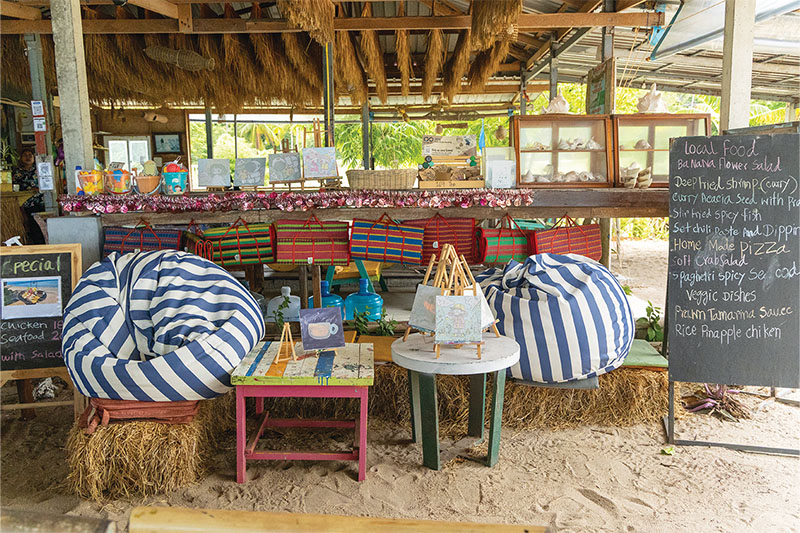
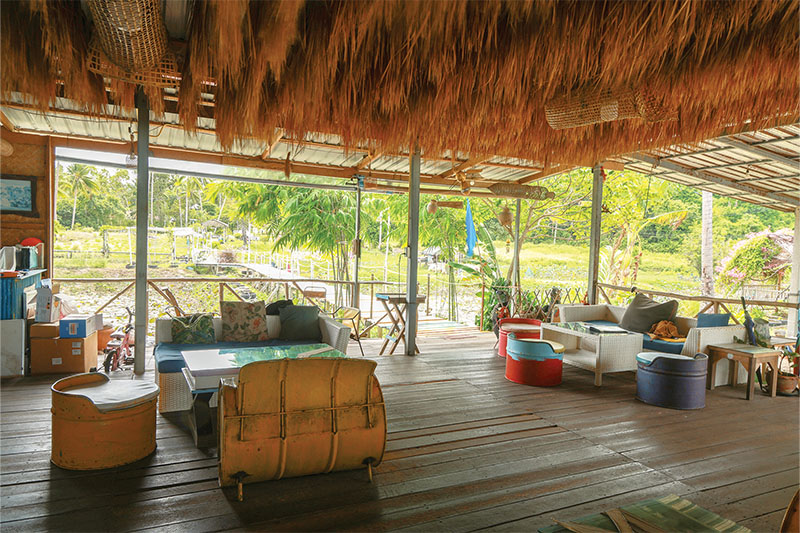
For visitors wanting to fully take in the ambience, the beach bar is the perfect place to slip into. It’s a structure that seems to float above the sand, where afternoons blur into early evenings. Here, guests, local artists, digital nomads and long-weekenders gather with mocktails or low-sugar juices to feel the wind press gently against their open palms and watch the sky turn apricot.
Chatchawat keeps the music light. “Just enough to make you breathe a little slower,” he says.
If Samui has long been a destination for sunseekers, Khao Pa Na Lay is something subtler: a refuge for the over- connected, the gently burned-out, and those who need isolation that doesn’t feel lonely.
Visitors are encouraged — though never instructed — to sink their feet into warm sand, feel the subtle sting of sea salt against their skin, and let the wind cool their wrists after hours of reading or sketching. The lotus pond draws some into quiet contemplation; others come for the sunset ritual, when hands instinctively reach for their drinks, not their phones.
“People should have a place where they can de-stress without trying too hard,” Chatchawat reflects. “Nature already knows what to do. You just have to let it.”
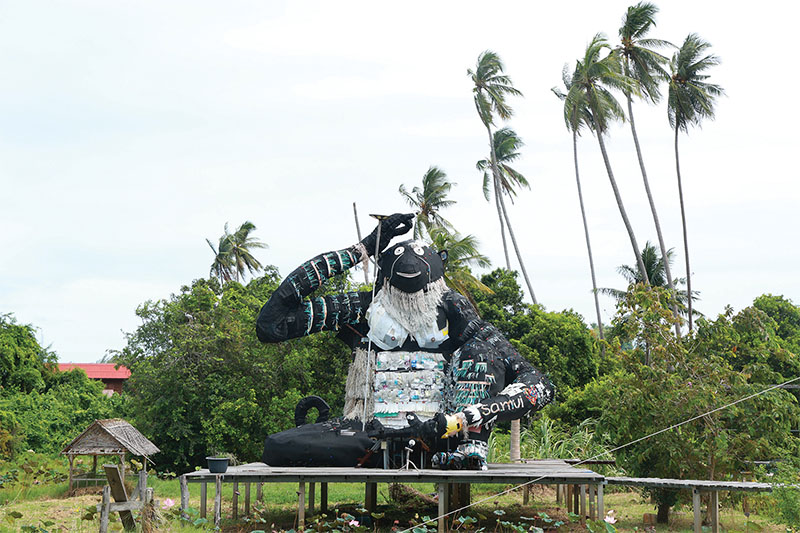
Walk the shoreline and you’ll find pieces of sea-borne debris – washed-up fishing fragments, sculptural driftwood, ropes and offities shaped by tide and time – assembled into artworks that look both accidental and deliberate.
Chatchawat laughs when asked about them. “I’m not an artist. I’m ust an architect who sometimes thinks he’s an artist.”
Yet his sculptures form an honest vocabulary of this place and the materials he collects from the beach are given new meaning to become objects reborn without polish. It’s sustainability that doesn’t need branding or gloss.
Khao Pa Na Lay is a retreat anchored in the small luxuries of being present. Feeling the wind tug at your sleeves, digging bare toes into sun-warmed sand, and watching the sun disappear slowly enough that you remember what slowness feels like. It’s a hidden gem that invites you to isolate just long enough to reconnect with yourself, the landscape, and silence.