

Folded Histories
Carried across seas by Muslim traders and shaped by local tastes, roti in Southern Thailand tells a story of migration, faith, and cultural exchange. On Samui, travellers can savour this crispy, golden staple while tracing the region’s rich blend of cultures
and traditions.
Photos: Pangchanak Pangviphas
At first glance, a Thai roti stall is pure theatre, as the vendor stands over a flat griddle, his hands moving with agility— slapping, stretching, flipping dough until it becomes impossibly thin, almost translucent. The dough hits the hot surface with a soft hiss, then crackles as it fries in butter or oil. Within minutes, what began as a simple ball of dough transforms into a golden, flaky parcel, crisp at the edges, tender at its core. It is then folded, sliced into bite- sized squares, and finished with a generous drizzle of sweetened condensed milk. For many Thais, especially in the south, this is comfort food in its most immediate, satisfying form. But roti’s story begins far from Thailand.
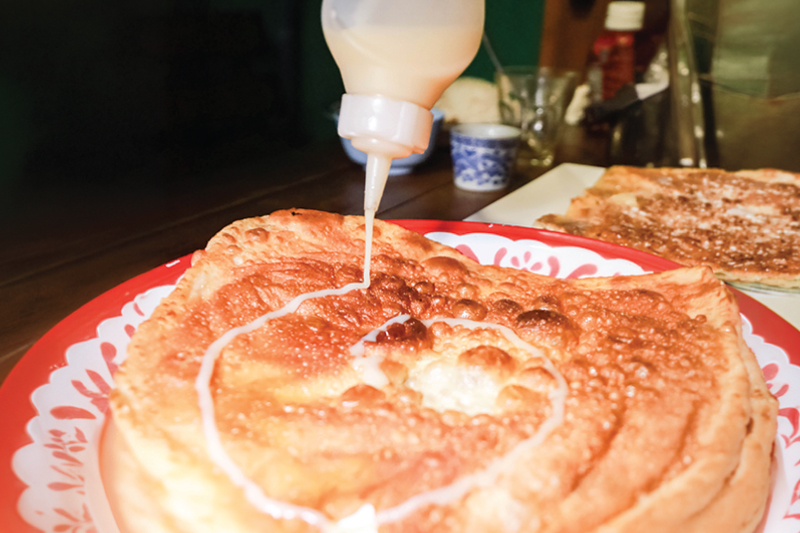
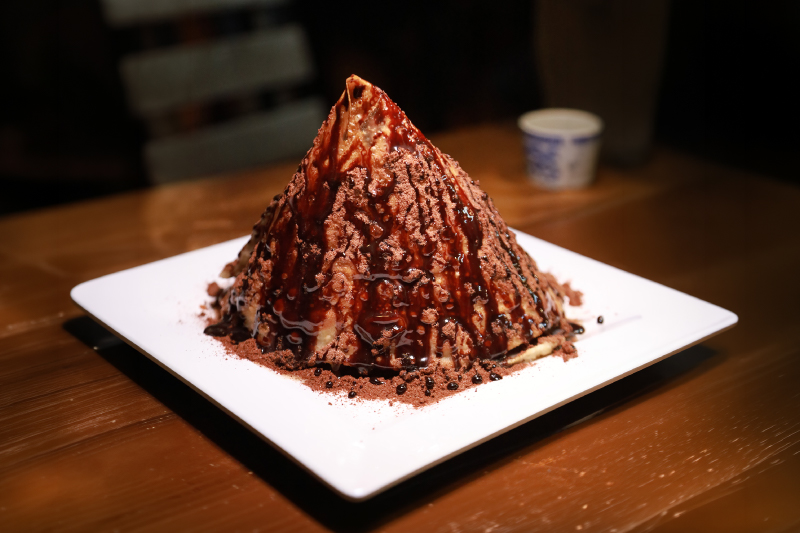
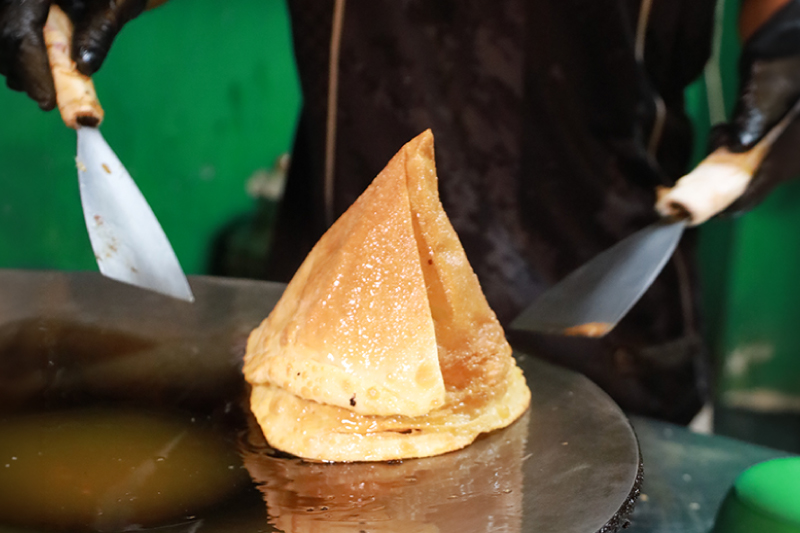
Its origin in Southern Thailand can be traced to Indian and Malay Muslim traders who travelled across the Andaman Sea centuries ago. With them came culinary traditions rooted in flatbreads— soft, pliable roti’s meant to be eaten with rich, flavourful curries. These early versions were practical, nourishing, and deeply tied to everyday meals within Muslim communities.
In provinces like Pattani, Yala, and Narathiwat, where Thailand’s Muslim population is most concentrated, roti remains closely linked to these roots. It is still commonly served alongside dishes like massaman curry or fish curry, acting as both utensil and accompaniment. In this context, roti is not a dessert but a staple. Yet what makes Thai roti so compelling is how dramatically it has evolved.
Over time, as roti moved from Muslim households into the broader street food culture, it began to change. Influenced in part by Malaysian roti canai—another flaky, pan-fried flatbread—the Thai version became thinner, crispier, and increasingly indulgent.