Roots of Remedy
For generations, Thais have turned to herbs, roots and leaves from forests and gardens for healing — a living tradition that continues to thrive on Koh Samui today.
Words: Sky Fitzgerald
Photos: Jiraphol Rikshasuta
Walk deep enough into any village on Koh Samui and you will find them — the aunties who know the land by heart. They crouch beside low hedges, break a stem, press a leaf between their fingers and inhale. Diagnosis and pharmacy in a single breath. For centuries, the people of this island have maintained an intimate, unwritten contract with its botanical world: the forest feeds, the garden heals, and the knowledge passes mouth to ear across every generation. Samui’s warm, humid microclimate and fertile soil have made it a cradle for an extraordinary range of medicinal flora. What follows is a tour of thirteen plants at the heart of this island’s living pharmacy.
CAMPHOR — GARABOON
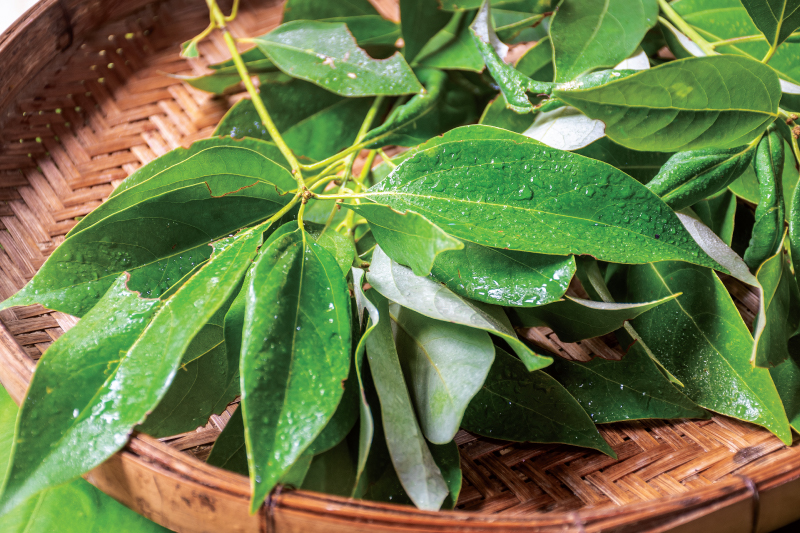
Extracted from the wood and bark of Cinnamomum camphora, camphor is among the oldest medicines in Southeast Asia. Locals press small crystals into warm coconut oil to create a liniment rubbed onto aching joints, temples during headaches, and chests during respiratory illness. Its sharp, clarifying vapour opens the airways and is used in steam inhalations for bronchitis. Applied externally, it calms inflammation and repels insects — a dual-purpose salve that never leaves a traditional household.
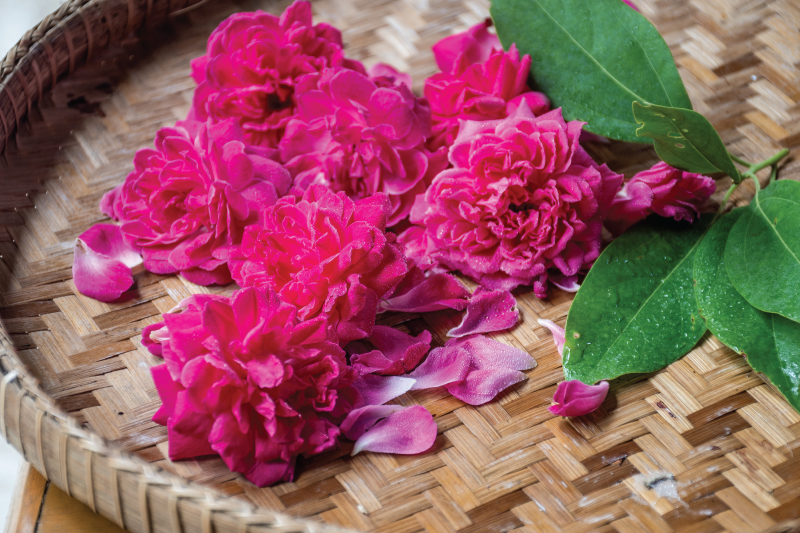
DAMASK ROSE – KOOLARB MON
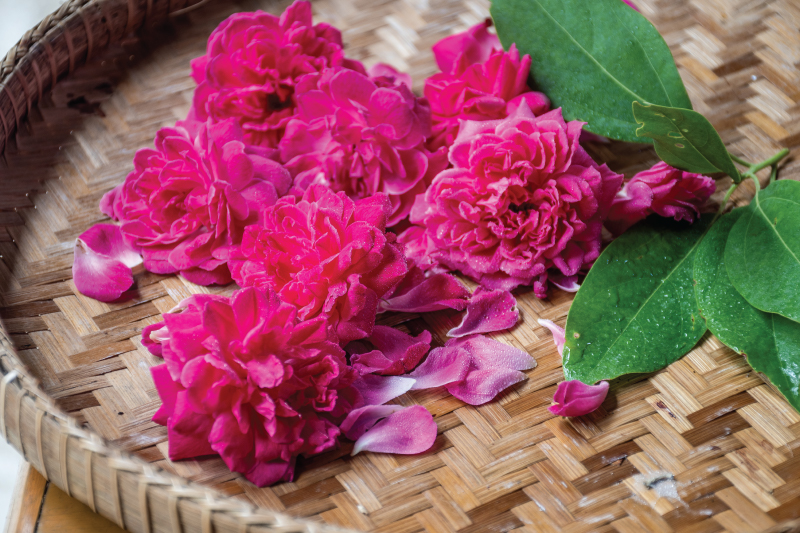
Though originally from the Middle East, the Damask rose has long found a home in Thai temple gardens and apothecaries. Dried petals are steeped into teas to calm anxiety, aid digestion, and regulate menstruation. Healers regard it as a flower that soothes grief, nervous tension, and despair.
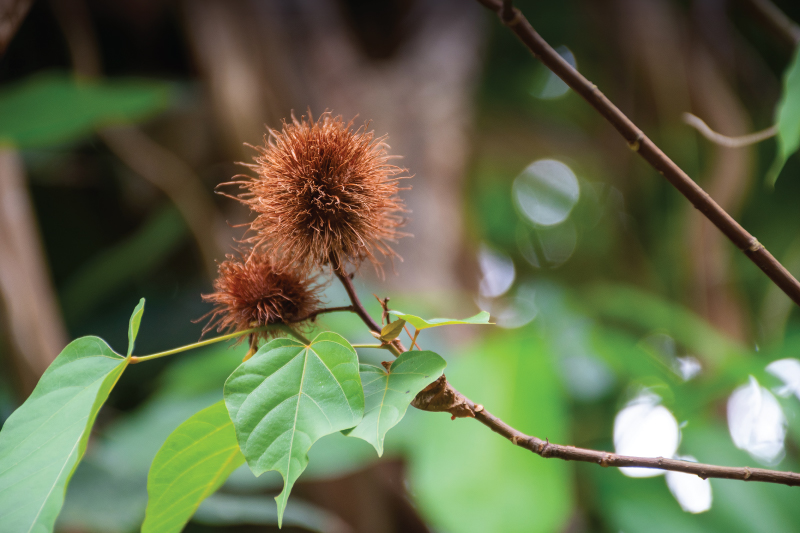
LIPSTICK SEED — KHAM THAI/KHAM SAED
The brilliant red seeds of Bixa orellana have coloured both food and bodies for millennia. In folk medicine, a leaf infusion is taken for fever reduction and as an expectorant for coughs. The seeds contain bixin, a carotenoid with documented antioxidant properties.
TORCH GINGER — DAALA
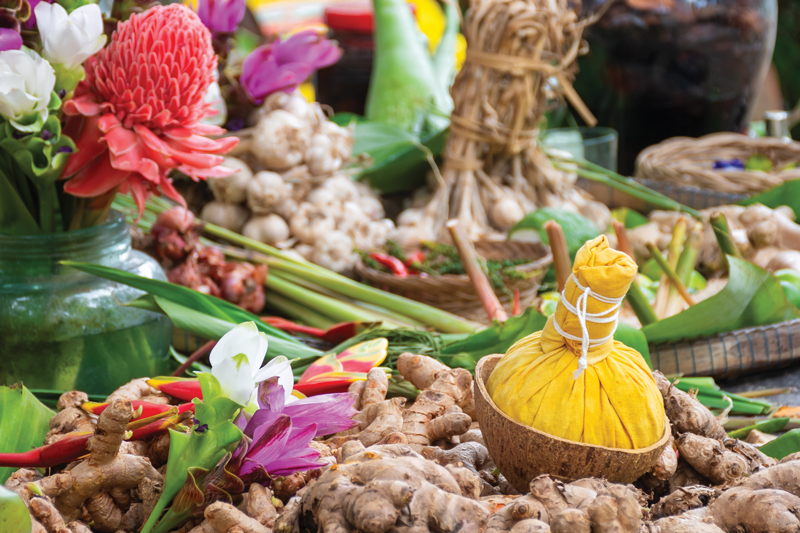
Etlingera elatior is impossible to miss on Samui — its towering crimson, white and pink flower spikes rise from dense jungle undergrowth like lit torches. But this plant earns its place in the medicine chest as much as in the kitchen. The flower bud is chewed raw to alleviate mouth ulcers, and a decoction of the rhizome addresses ear infections. Rich in antioxidants and antimicrobial compounds, the flowers are also added to traditional postpartum herbal baths, helping new mothers recover strength and resist infection in the vulnerable weeks after birth.
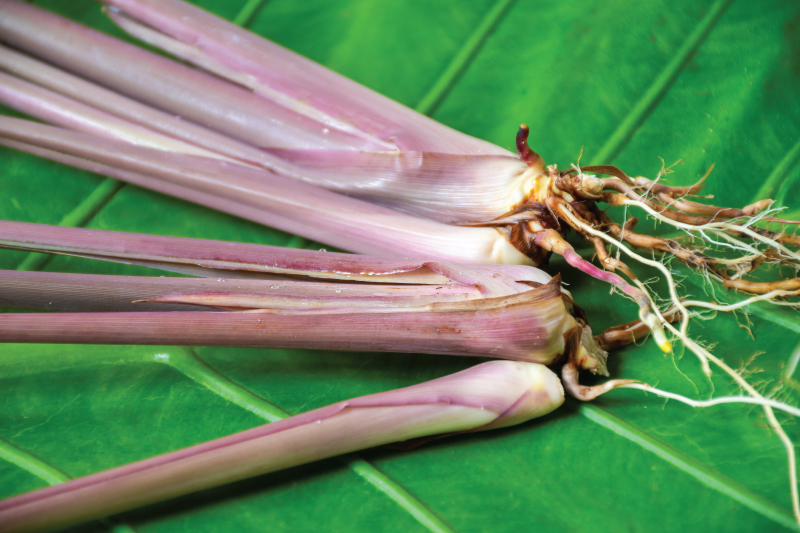
TORCH GINGER — DAALA
Etlingera elatior is impossible to miss on Samui — its towering crimson, white and pink flower spikes rise from dense jungle undergrowth like lit torches. But this plant earns its place in the medicine chest as much as in the kitchen. The flower bud is chewed raw to alleviate mouth ulcers, and a decoction of the rhizome addresses ear infections. Rich in antioxidants and antimicrobial compounds, the flowers are also added to traditional postpartum herbal baths, helping new mothers recover strength and resist infection in the vulnerable weeks after birth.
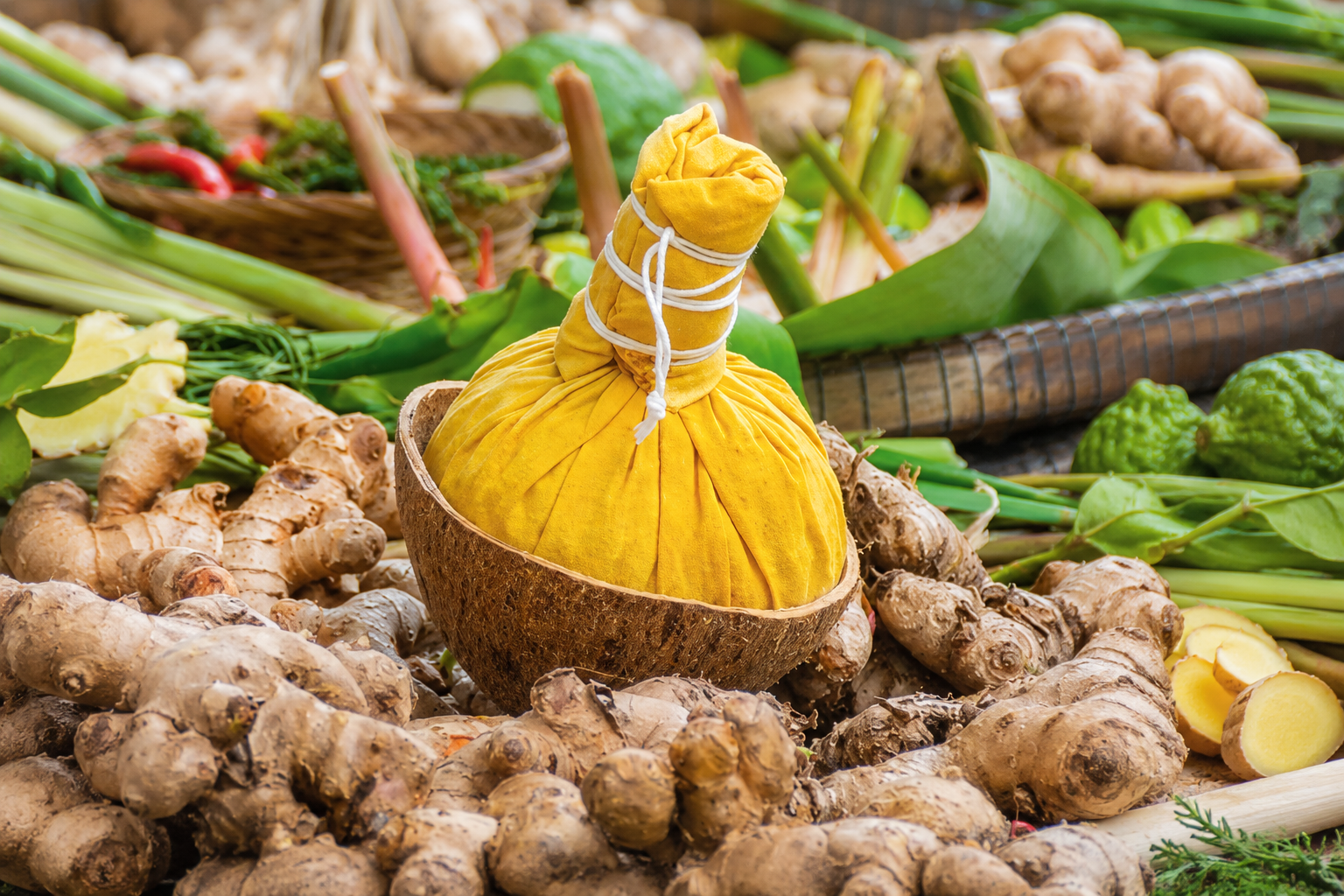
HERBAL COMPRESS BLEND — PONG FAI
The luk pra kob — the herbal compress ball — is perhaps the most theatrical expression of Thai botanical medicine. Pong fai is the powdered blend at its heart: a mixture of plai ginger, kaffir lime peel, tamarind leaf, turmeric, and aromatic salts, packed into a muslin cloth and steamed. Pressed rhythmically against the body’s muscles and joints, the compress releases heat and volatile oils simultaneously.
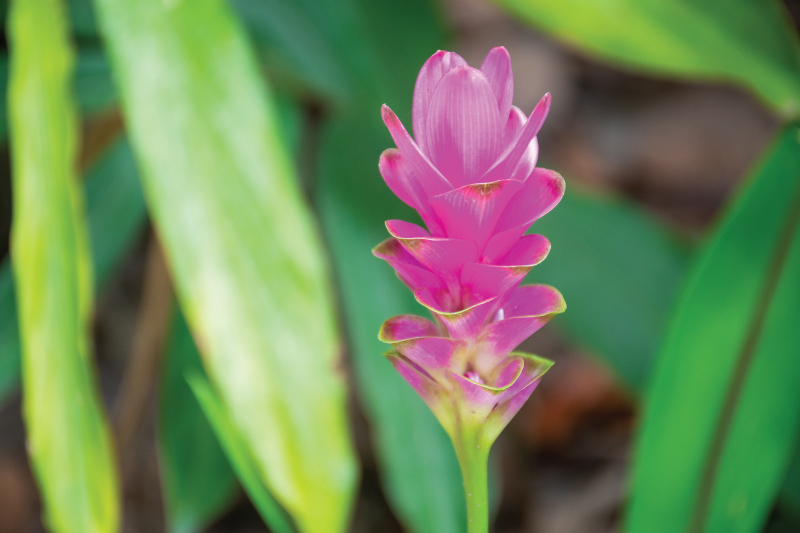
SIAM TULIP — PATOOMA
Curcuma alismatifolia, the Siam tulip, blooms in pink and purple clusters across the island’s highland areas. A cousin of turmeric, its rhizome carries a similar anti-inflammatory payload. Village healers brew the root into a medicinal tea to ease stomach aches and reduce bloating. Applied as a poultice, the mashed rhizome draws heat from inflamed skin and is said to speed the healing of minor wounds. Monks occasionally use it in ritual cleansing preparations — the medicinal and the spiritual, never fully separated.
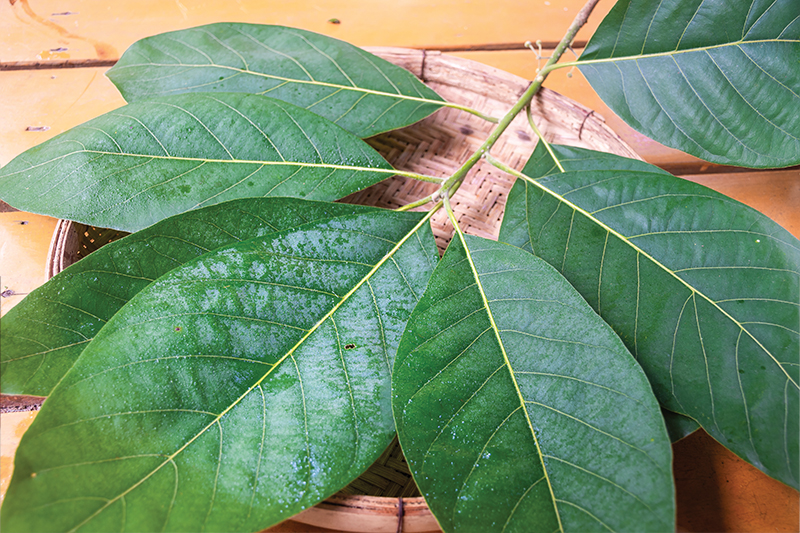
BAI MEE — LITSEA GLUTINOSA
Known in cosmetics as Litsea Glutinosa Leaf Extract, Bai Mee is a medium-sized evergreen tree from the Lauraceae family that grows readily across Thailand and tropical Asia. For generations, Thais have treated it as a kitchen-cabinet remedy for the hair — and modern cosmetic science is beginning to explain why it works so well. The secret lies in the leaf’s mucilage, a slippery polysaccharide that, when boiled in water, releases a gel- like liquid.
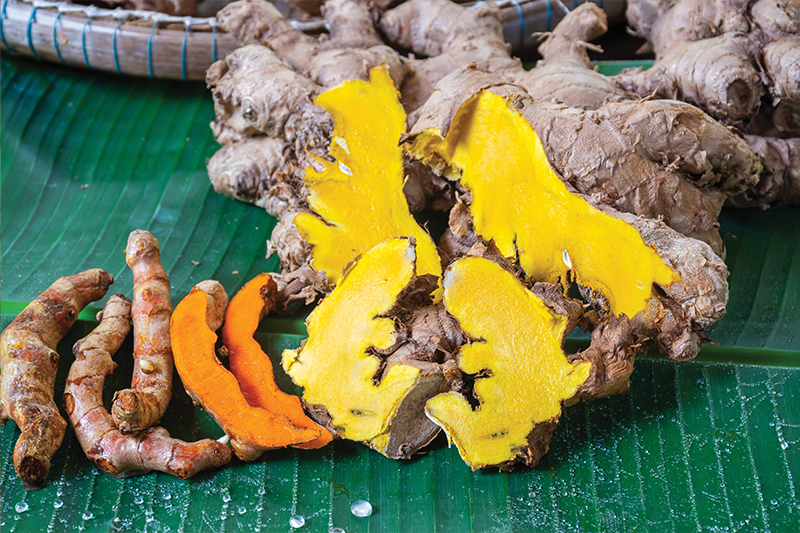
TURMERIC – KAMIN CHAN
Curcumin, the active compound in turmeric, is one of the most trusted natural remedies for supporting long-term health. Often called a “wonder spice,” turmeric has been widely used to help manage digestive issues, acid reflux, and joint discomfort. One of its greatest benefits is its powerful anti- inflammatory effect. Curcumin is also a potent antioxidant that helps fight harmful free radicals.
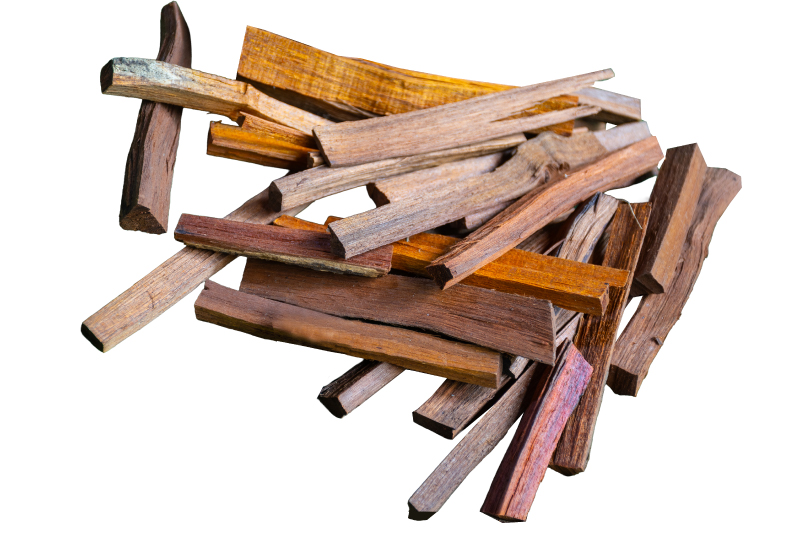
SAPPANWOOD — FAANG
Caesalpinia sappan has coloured Thai textiles red for a thousand years, but its heartwood is also one of traditional medicine’s most valued blood tonics. Shaved into water and simmered, the wood produces a deep crimson tea that healers prescribe for irregular menstruation, blood disorders, and post-illness fatigue. Modern analysis confirms the presence of brazilin and sappanin — compounds with genuine anti-inflammatory and anticoagulant activity.
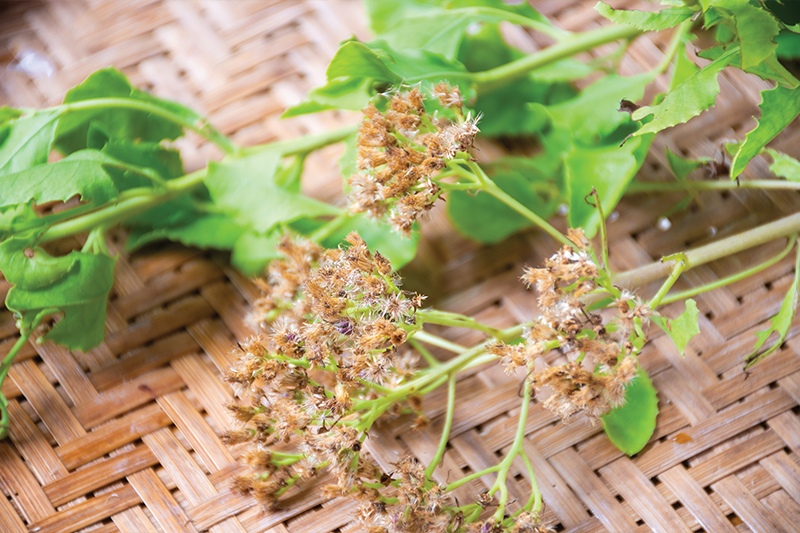
KHLU
Pluchea indica grows wild across the island’s coastal wetlands. All parts of the plant are used as a diuretic and antidiabetic, and a decoction of the roots or leaves is recommended for treating fever, headache, rheumatism, and sprains. Overconsumption of the leaves for long periods of time may cause health problems, especially for individuals suffering from cardiovascular disease and hypertension.
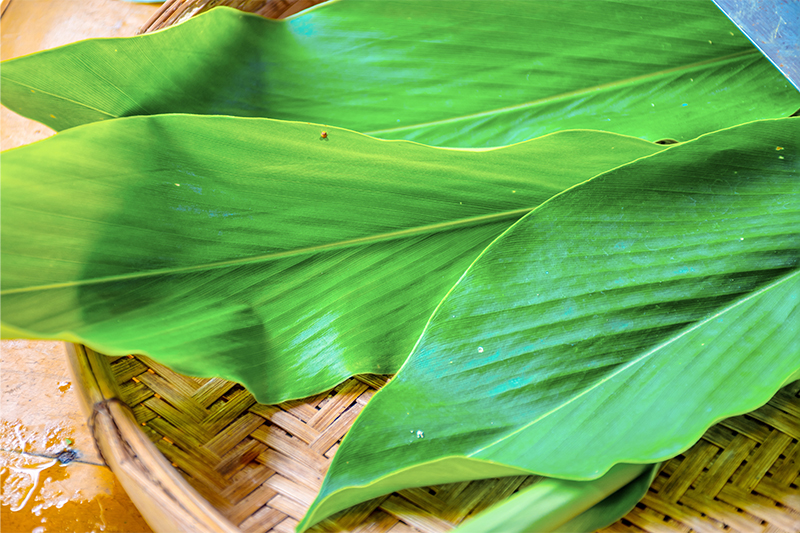
WAN SAO LONG
Its name translates loosely as “the herb that makes a maiden lose her way” — a nod to its reputation as a beautifying and rejuvenating tonic. Curcuma aeruginosa is a wild ginger whose dark-fleshed rhizome contains sesquiterpenes with documented antimicrobial action, and it features in several traditional formulas addressing skin clarity and hormonal balance.
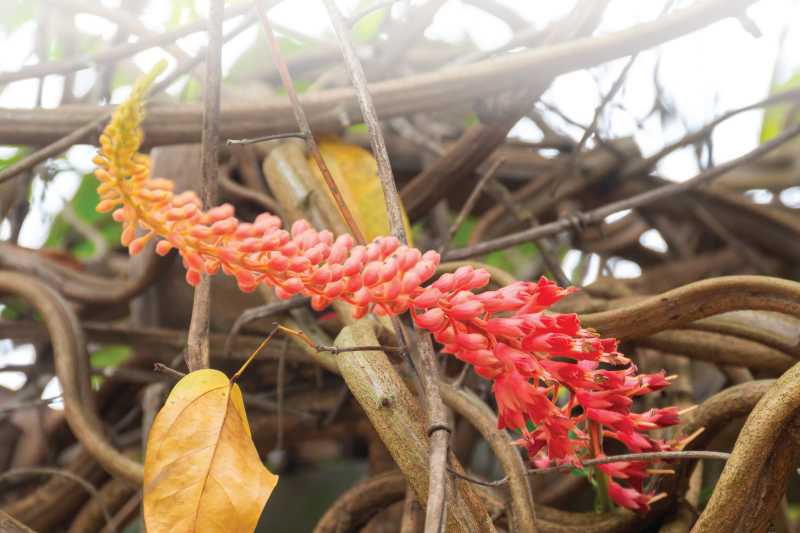
RED VINE — YA NAANG DAENG
Ventilago harmandiana, the red-stemmed vine that climbs through Samui’s secondary forest, is used principally for diabetes and chronic inflammation. Village practitioners regard it as one of the most trustworthy detoxifying herbs available locally, and it features in many of the traditional multi-herb tonic formulas passed down through island families.
These thirteen plants represent only a fraction of the botanical intelligence accumulated on this island. They share something beyond their healing properties: they are relational. Each one is known not through a manual but through a person — a grandmother, a monk, an old fisherman who knows which leaf to crush when the sea gives you a wound. Samui is changing fast. But walk those village paths and you will still find the aunties crouching at the hedgerow. The pharmacy is still open.
Important: The plants described here are used in traditional folk medicine and are presented for cultural and educational purposes only. Always consult a qualified medical doctor before using any herbal remedy. Allergic reactions and adverse interactions with medications can occur