The Sacred Procession on the Water
Each October, as the rains begin to ease and the Gulf of Thailand settles into its quietest moods, the people of Koh Samui do something their ancestors have done for centuries — they take their Buddha images to sea.
Words: Sky Fitzgerald
Photos: Pangchanak Pangviphas
Chak Pra, the Festival of the Sacred Boat Procession, is one of southern Thailand’s most spiritually charged and visually- arresting traditions: a moving tableau of painted vessels, ceremonial offerings, and communal devotion that turns the island’s waterways into something altogether extraordinary. For those fortunate enough to witness it, the experience is unforgettable.
Chak Pra — observed across southern Thailand on the first day of the waning moon in the eleventh lunar month, typically falling in October — is not a spectacle designed for outsiders, though outsiders are warmly welcomed. At its heart, it’s a deeply felt act of collective merit-making, a community’s annual conversation with the sacred, conducted in the language of boats, flowers, lanterns, and water.
The tradition’s origins are rooted in Buddhist cosmology. The festival traces its beginnings to the time when the Lord Buddha retreated to the Tavatimsa Heaven — a realm described in ancient texts as lying above the continent of Jambudvipa — to deliver the Abhidhamma teachings to his mother, Queen Maya, who had passed into that realm. The teaching lasted three months. When the Buddha finally descended back to the human world, great multitudes of people and devas (divine beings) gathered to receive him. This moment of joyful, reverent welcome became, over centuries, the ritual template for Chak Pra.
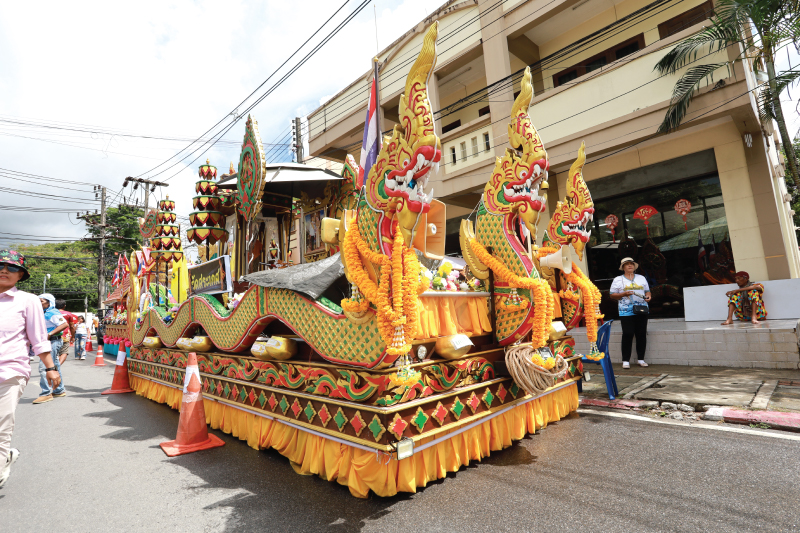
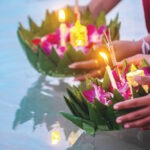
In Koh Samui, the festival is observed with particular devotion. At the appointed time in the eleventh month – precisely the fifteenth day of the waning moon – temples throughout the island bring their most sacred Buddha images down to the water’s edge. The images are placed aboard ceremonially decorated boats, their prows adorned with floral offerings, colourful banners, and bamboo poles hung with garlands. Two boats are bound together to provide a stable ceremonial platform; a central mast, called hua keh, rises from the lashing point, strung with ropes of huay blossom and la sen flowers, their colours brilliant against the grey-blue of the morning sky.
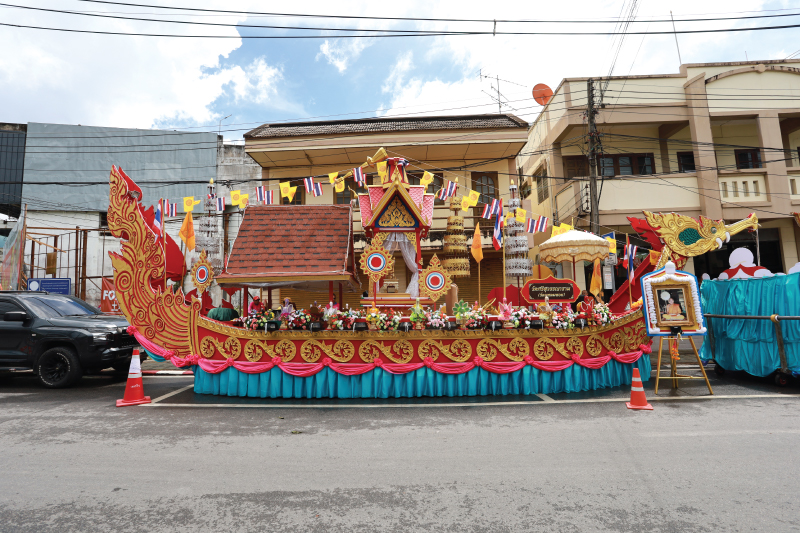
These days, however, the people of Koh Samui have shifted to celebrating on land. In Koh Pha-Ngan, locals still bring the Buddha images down to the water’s edge, as they did in the olden days. The preparation is meticulous, and intentionally so. Temples and community groups spend days crafting and decorating the ceremonial vessels, competing in an atmosphere that is joyful rather than rivalrous – each community striving not to outdo others, but to honour the Buddha as magnificently as they are able. The boats are adorned according to each group’s resources and skill, yet all share the same devotional grammar: flowers, candles, incense, and the quiet grandeur of a well-made offering.
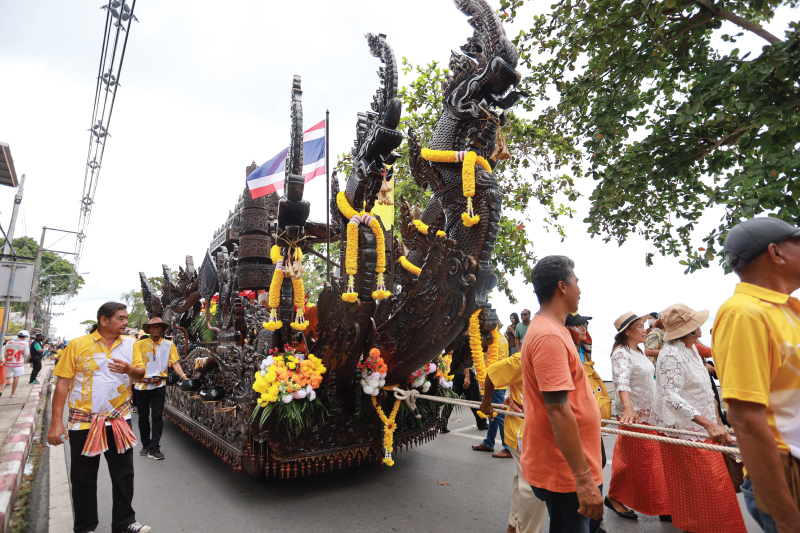
When night falls on the eve of the procession, a grand samosorn ceremony takes place aboard the boats. Monks chant blessings. The scent of incense drifts across the water. Villagers come with trays of food and offerings, and there is music — specifically, the traditional lam ruea boat songs for which this festival is known, a genre of folk verse unique to southern Thailand that has been sung at Chak Pra for as long as anyone can remember.
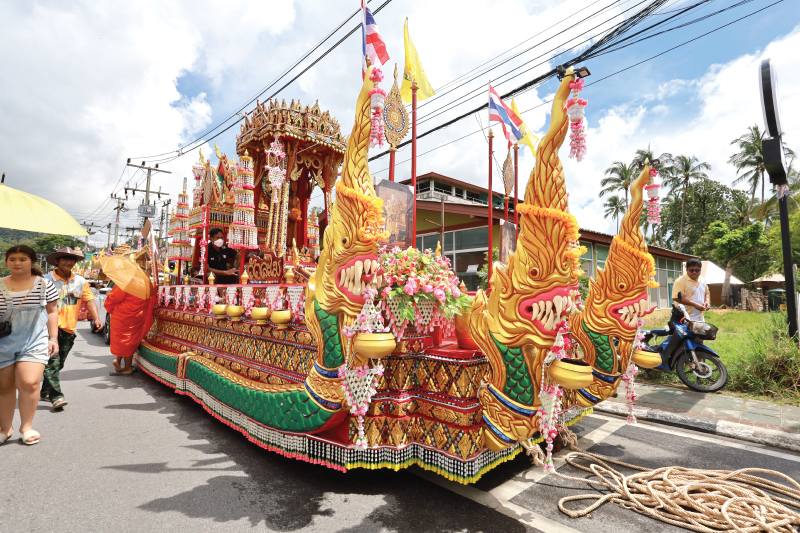
These songs deserve a moment’s attention. Preserved in the cultural records of Koh Samui’s district office, the lam ruea tradition is a call-and-response form in which men and women sing alternating verses, often playful, often flirtatious, always rooted in the imagery of boats, water, and the communal labour of scrubbing and adorning the vessel. Sample verses recorded by the Koh Samui cultural community speak of men and women coming together, of mae pleng — lead singers — who do not tire, of children joining the chorus, of the boats being made beautiful for the Buddha. The songs carry something that formal liturgy cannot always convey: the warmth of ordinary people finding joy in collective devotion.
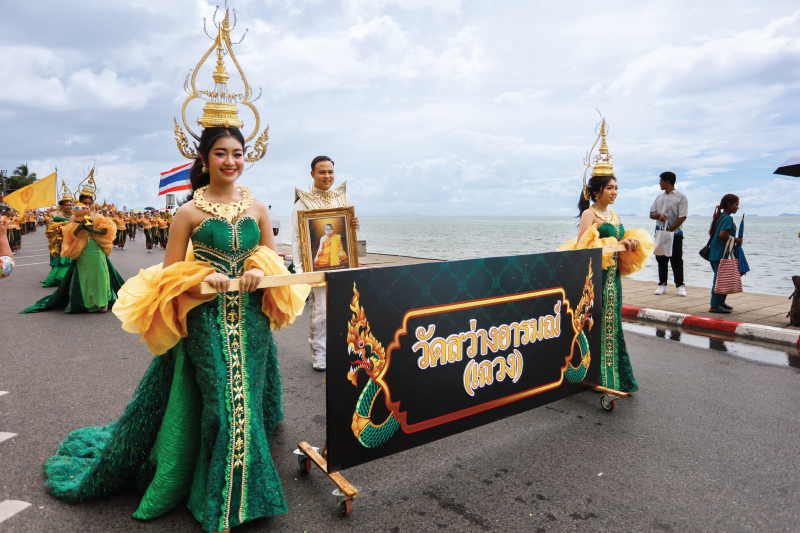
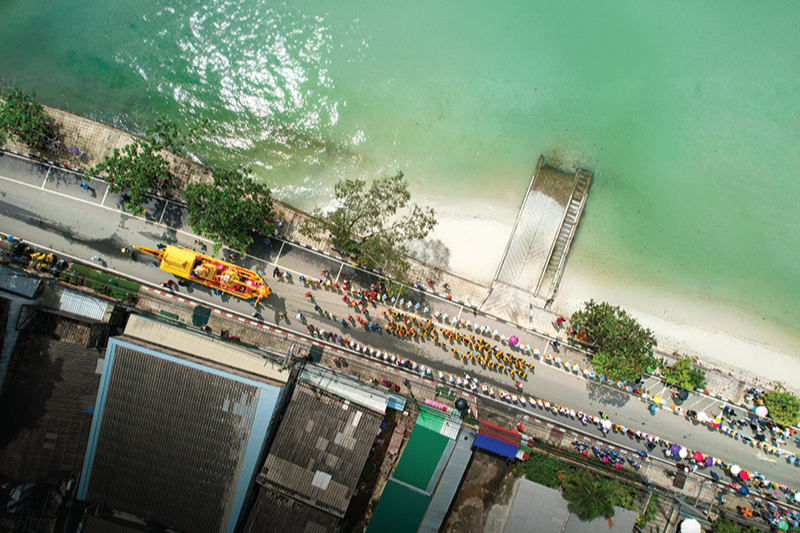
At dawn, the procession begins. Led by two boats lashed together in the ceremonial formation, the Buddha image moves along the waterway accompanied by a flotilla of smaller craft, each belonging to a different temple or community group. The route is fixed by tradition; certain points along the water are designated stations where the boat must stop and offerings be made. Villagers line the banks. Some wade into the shallows to present garlands directly to the passing image. The atmosphere is one of concentrated, joyful reverence — not the hushed solemnity of a church, but something more alive, more communal, more southern Thai.
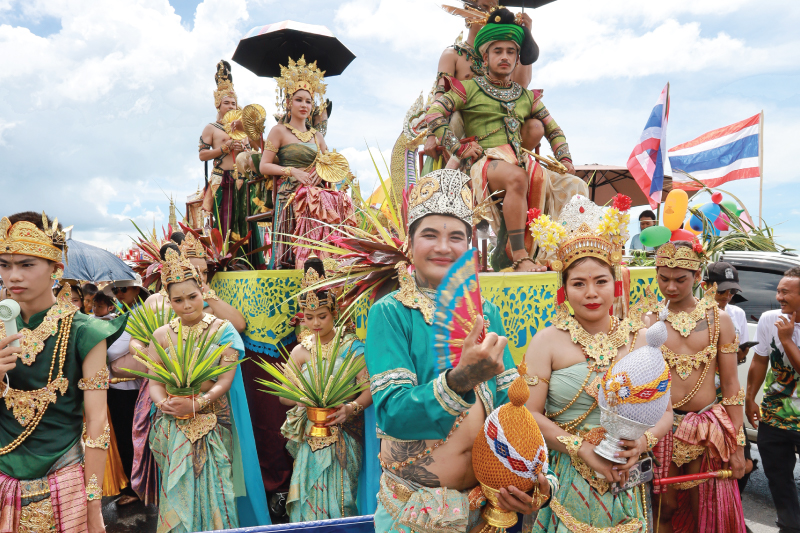
At dawn, the procession begins. Led by two boats lashed together in the ceremonial formation, the Buddha image moves along the waterway accompanied by a flotilla of smaller craft, each belonging to a different temple or community group. The route is fixed by tradition; certain points along the water are designated stations where the boat must stop and offerings be made. Villagers line the banks. Some wade into the shallows to present garlands directly to the passing image. The atmosphere is one of concentrated, joyful reverence — not the hushed solemnity of a church, but something more alive, more communal, more southern Thai.
When the procession concludes, the Buddha image is returned to its temple, and a final ceremony – the song nam pra, the pouring of sacred water – is performed. Water drawn from the procession route is poured over the image as a final act of purification and blessing. The boats are unmoored, the garlands begin to wilt in the tropical sun, and the community gathers for a shared meal.
For visitors staying in Koh Samui’s villas and resorts during October, Chak Pra presents a rare opportunity to observe a beautiful tradition and to feel the particular quality of life that sustained communities have always known: the sense that beauty and devotion are not ornamental, but essential. The festival is open to all, and local temples welcome respectful visitors. Dress modestly, arrive early, and if a local family invites you to join them along the bank, accept without hesitation. The boats will come – painted, flower-hung, lamp-lit – and the old songs will carry across the water as they always have.
Some things in the south of Thailand have not changed. They were never meant to.
Chak Pra falls on the first day of the waning moon in the eleventh lunar month, typically in October. In Koh Samui, contact the local District Office or your concierge for the precise dates and locations of temple processions each year. Modest dress is required at all temple sites.