Samui’s Secret Sour Note
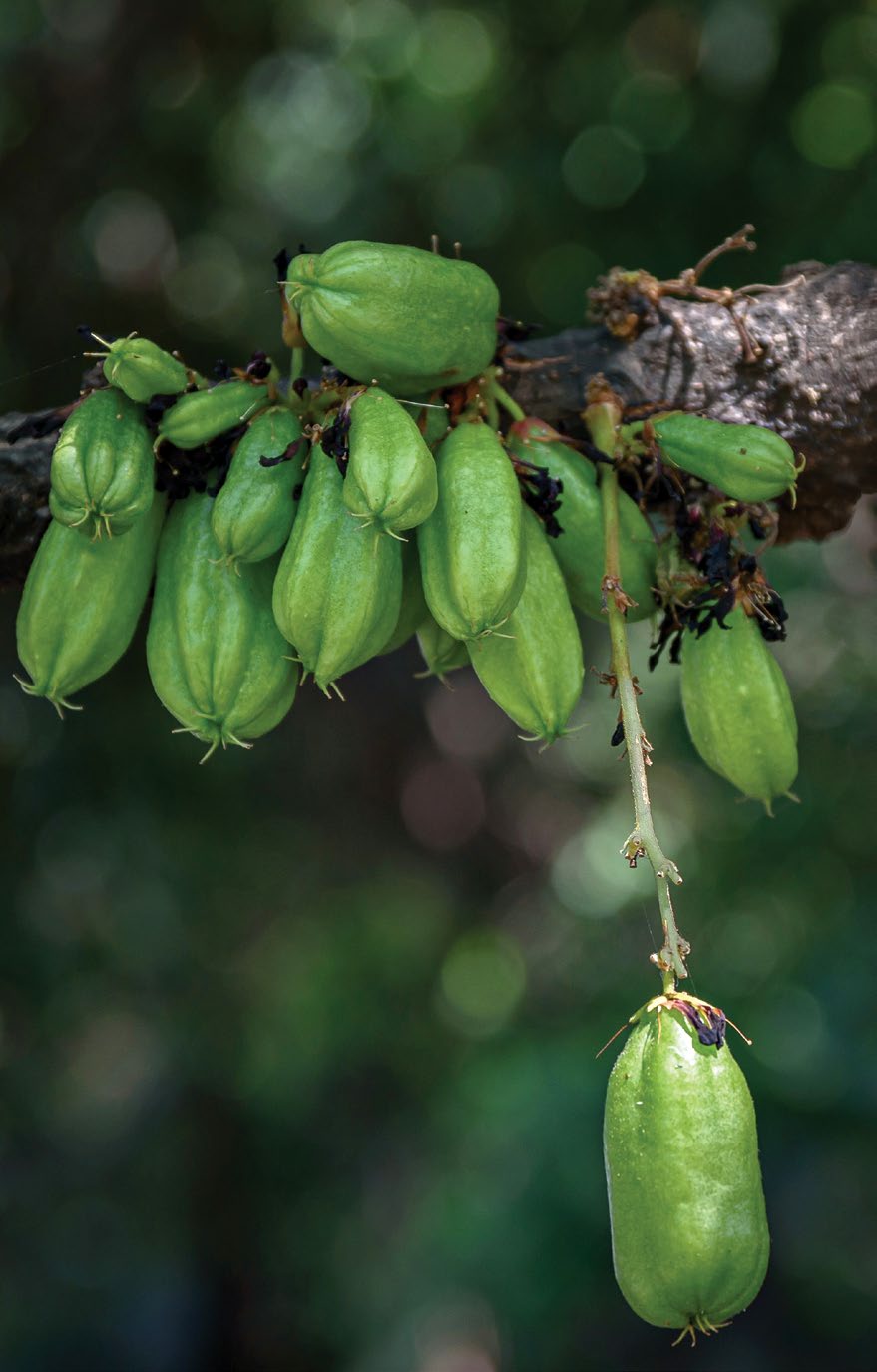
Known as taling pling, the bilimbi tree is a modest presence in many Thai gardens – yet its fruit plays a quietly vital role in the kitchen. In the South, it’s also called moong mung. A cousin of the starfruit, bilimbi produces clusters of pale-green, cucumber-shaped fruit that cling directly to both branch and trunk. Their bite is bracingly tart – so much so that locals use them less as fruit and more as a natural flavour enhancer.
In home kitchens and beachside eateries alike, taling pling lends its sharp tang to gaeng som curries, salads and light, refreshing soups. Some pickle it for later use; others simmer it into jam or sweet compote to balance its natural acidity. Believed to have journeyed from the Malay archipelago generations ago, bilimbi has long taken root in Thailand — and flourishes beautifully in Samui’s fertile soil.
If you find yourself at a seaside restaurant here, look out for a taling pling salad with pu maa (flower crab) – a dish that captures the island’s spirit at its most vibrant and refreshing.