THE TREE THAT BUILT AN ISLAND
On an island shaped by the sea, it is the coconut palm — not the ocean — that has long provided the bedrock of daily life on Koh Samui. From root to frond, nothing goes to waste.
Byline: Sua Pon Nam
Photos: Jiraphol Rikshasuta
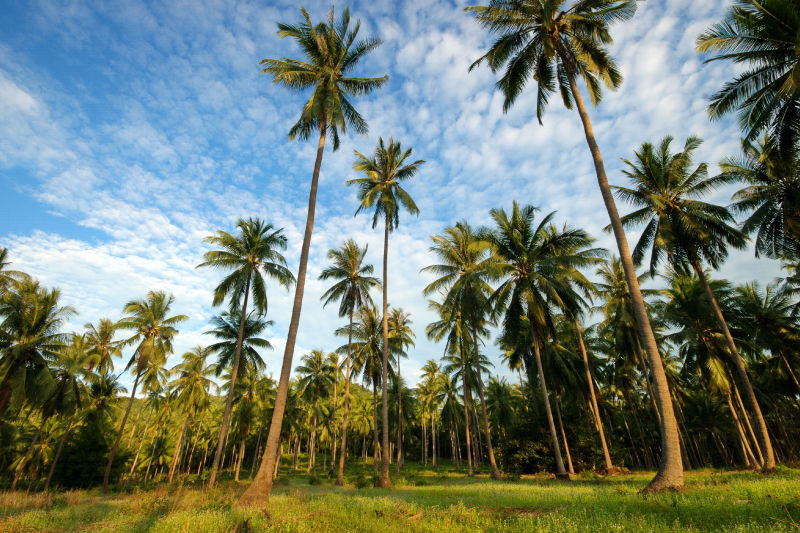
Ask any old-timer on Samui what kept families fed, housed, and solvent through the lean decades before tourism arrived, and they will not hesitate. The coconut. Not the beaches, not the fishing boats, not the rubber trees on the hillsides — the coconut. For generations, the island’s interior was one vast, rustling plantation, its palms standing in loose, wind-combed rows across every slope and lowland. Families measured their wealth not in baht but in trees. The copra trade — dried coconut flesh pressed into oil — connected Samui to Bangkok, to Singapore, to markets that most islanders would never see. The palm was landlord, bank, and larder all at once.
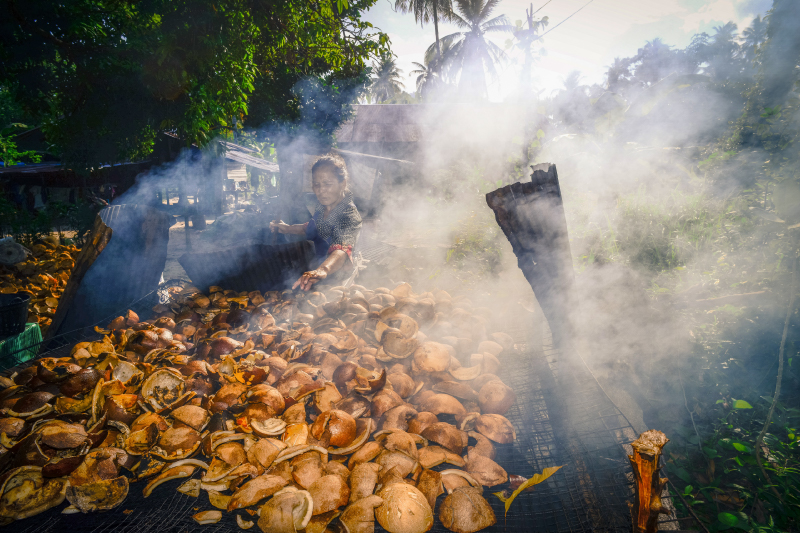
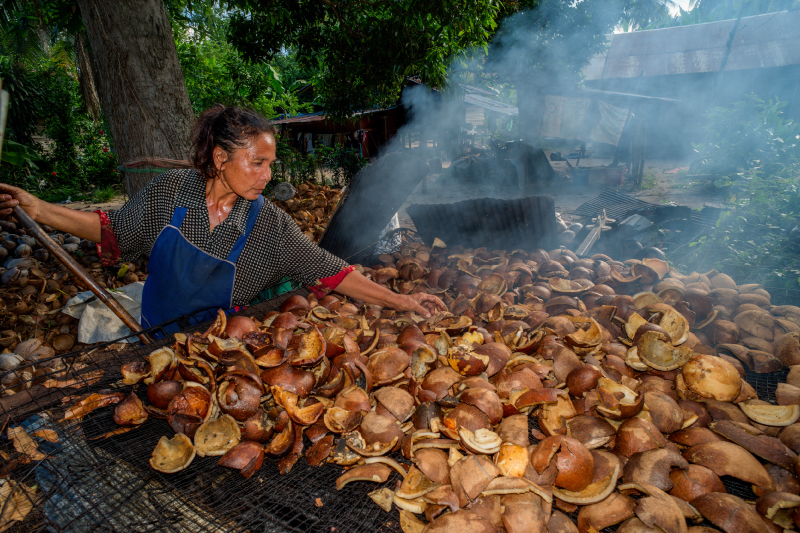
The husk and the flesh divided up the labour of living. Rough coir fibre, stripped from the outer shell, was twisted into rope and mat, patched into fishing nets, or packed beneath roofing. The hard inner shell made charcoal, ladles, and bowls. Nothing was discarded out of abundance; everything was discarded only when it had given everything it could. Coconut oil lit lamps and softened skin. The water inside young green nuts brought down fevers and steadied the stomach after illness. Even the broad, arching fronds were folded and pinned into baskets, platters, and the temporary shelters that appeared at every temple fair and merit-making.
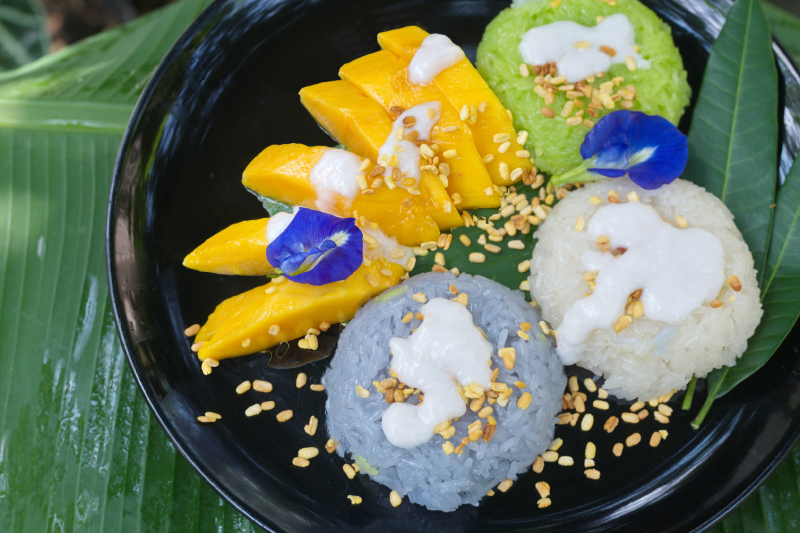
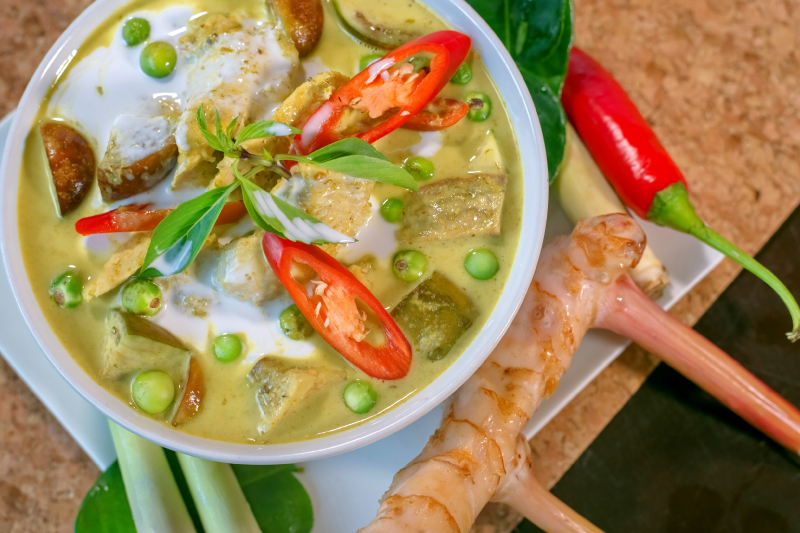
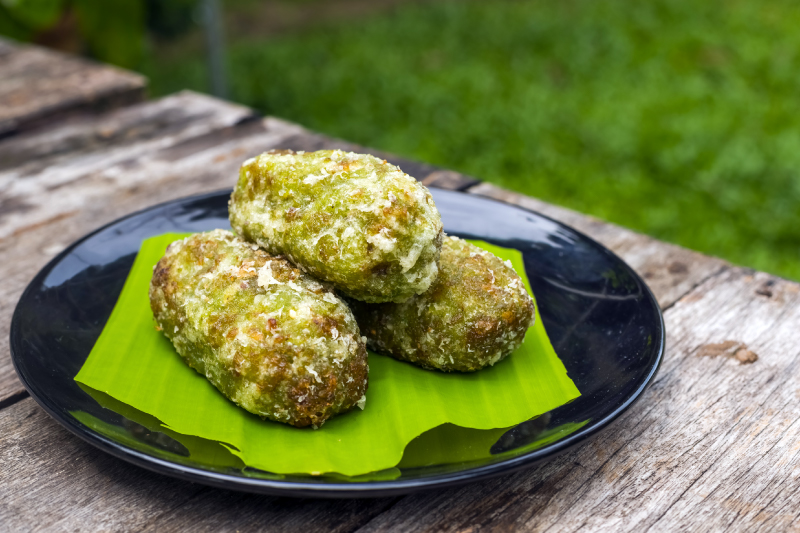
It is in the kitchen, though, that the coconut truly came into its own — and where it remains, stubbornly irreplaceable. Khanom krok, the small molten-centred pancakes cooked in dimpled iron pans over charcoal, are made from nothing more than rice flour, palm sugar, and rich coconut cream, yet they disappear from the vendor’s cart faster than she can pour them. Khao mao
tod — chewy rice-flour balls stuffed with shaved coconut— appear at snack stalls and late-night market stalls alike, eaten by grandmothers and schoolchildren with equal enthusiasm. These are the island eating as it always has — generously, without fuss, and with the coconut, as ever, at the centre of everything.