
Khao Hor: Samui’s Wrapped Tradition
Khao hor, Samui’s banana leaf–wrapped meal, reflects a tradition of simplicity, sharing, and island life.
Byline: Bella Luna
Photos: Jiraphol Rikshasuta
In the past, the people of Samui mainly worked in agriculture—farming rice, orchards, and plantations near their homes. They would bring food with them to eat at midday. Likewise, when travelling for business or visiting relatives in distant villages—often crossing mountains, streams, or even travelling by rowboat or sailboat from one bay to another—it was necessary to prepare food for the journey. This “packed lunch” was known as khao hor, or rice wrapped in fragrant banana leaves, a tradition that began as a practical solution for daily life—yet it endures today as something far more meaningful.
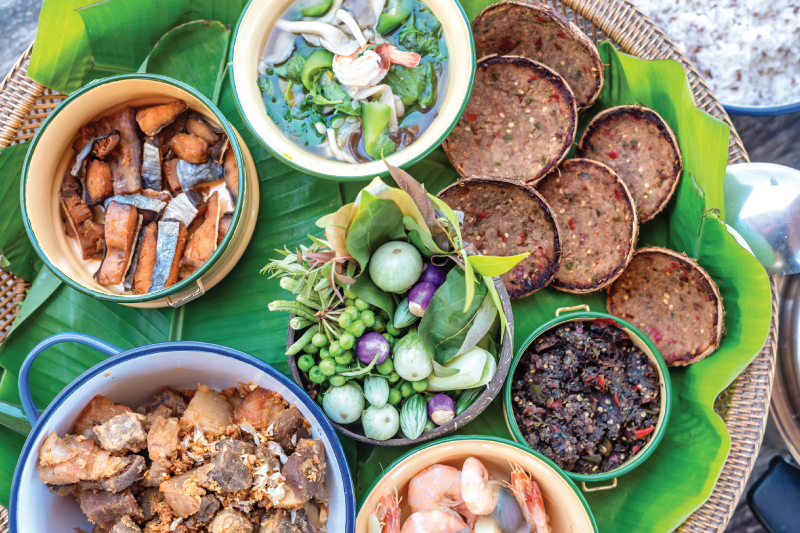
Inside, one would find perfectly cooked rice accompanied by humble dishes—perhaps a dry naam prik (chilli paste), tamarind relish, or grilled salted fish. Occasionally, there might be a salted egg or a simple kai jiew Thai omelette, each chosen for its ability to travel well.
The banana leaf, both practical and elegant, imparted a delicate aroma to the food. It also reflected a way of life rooted in sustainability—used as both wrapping and serving vessel, then returned to the earth once the meal was finished. Meals were often shared and eaten by hand.
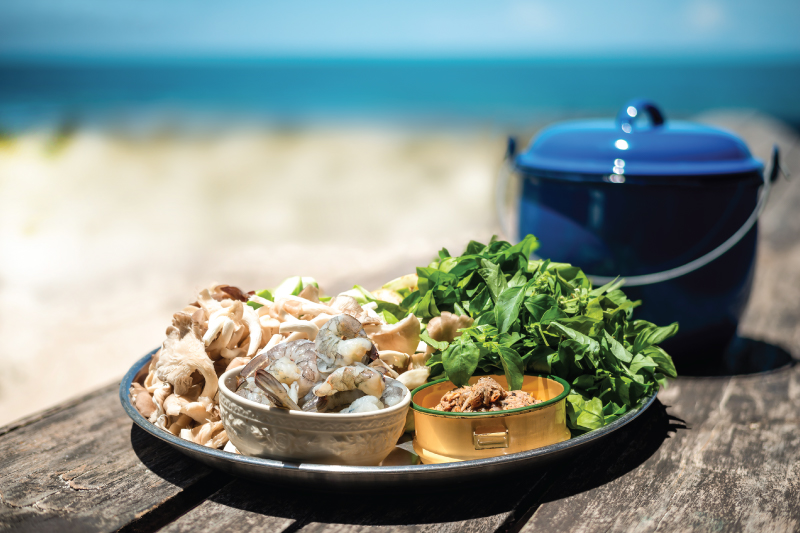
Over time, this modest custom evolved into a more social affair. What began as a solitary or family meal became an occasion for gathering. Relatives and visitors would come together, bringing with them pinto (tiered containers) filled with a wider variety of dishes— curries, fresh fruits, and sweet treats. Meals were enjoyed outdoors, perhaps by the sea or beneath the shade of trees, with woven mats laid out to welcome all who joined.
As Samui developed—particularly following the construction of the island road in the late 1960s—the tradition of khao hor gained new recognition. During the road’s construction, local workers were nourished each day with these carefully prepared meals.
Today, while tables, utensils, and modern conveniences may accompany the meal, the spirit of khao hor remains unchanged. It is not only about the food itself, but about generosity, connection, and the pleasure of sharing something thoughtfully prepared.
It is often said that while restaurant dining satisfies the palate, a meal of khao hor offers a taste of home and of heartfelt hospitality, a feeling food enjoyed at a restaurant can never match.
Preserving this tradition ensures that its quiet beauty continues to enrich life on Samui, just as it has for generations.