Under the Same Moon
What began as a low-key farewell gathering on a quiet Thai island has evolved into one of the world’s most recognisable beach parties. Still guided by moonlight rather than marketing, Koh Phangan’s Full Moon Party remains a rare example of a celebration shaped by community, chance and place.
Words: Bella Luna
There are places that host a party, and then there are places where a party becomes a place. Koh Phangan’s Full Moon Party belongs firmly in the latter category. Once a whispered tip passed between backpackers and now a monthly migration marked on global travel calendars, this beachside gathering has outgrown the word “event” and settled into something closer to ritual.
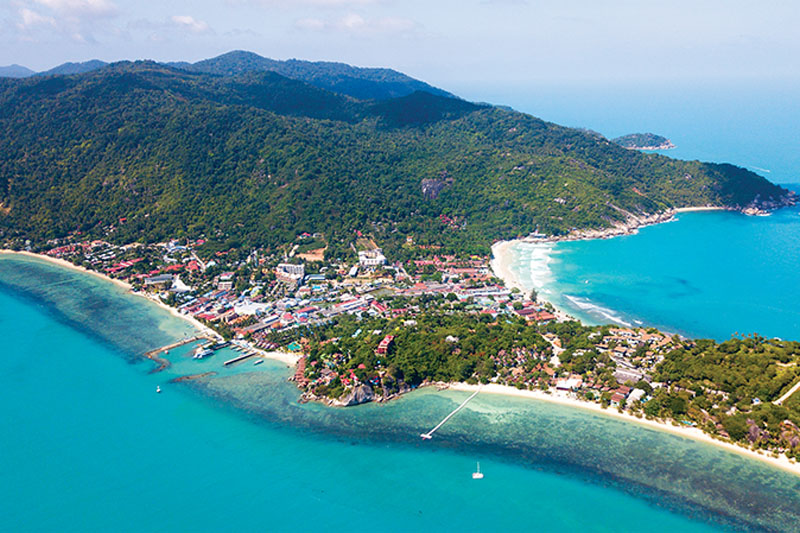
On the night of the full moon, Haad Rin Beach undergoes its familiar metamorphosis. By day, it is a gentle arc of white sand, fringed with palms and the sort of turquoise water that features heavily in airline magazines. By night-specifically that night-it becomes a luminous corridor of sound, colour and movement. The moon rises over the Gulf of Thailand, indifferent yet indispensable, as if it knows it has been cast in a supporting role it never auditioned for.
The origins of the Full Moon Party are refreshingly unpolished. In the late 1980s, Koh Phangan was still a backwater even by Thai island standards. Electricity was patchy, roads were few and Haad Rin was a quiet beach dotted with simple bungalows catering to long-staying travellers. According to local lore, the first party was thrown by a bungalow business as a farewell gathering for a group of friends. Without stages or sponsors to set the rules, the night belonged entirely to those who showed up-dancing barefoot in the sand, aware that they were part of something gently, unexpectedly special.
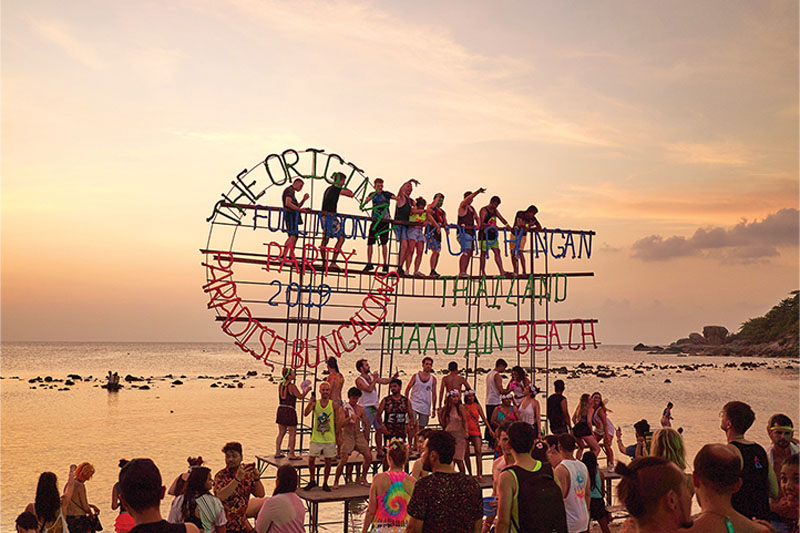
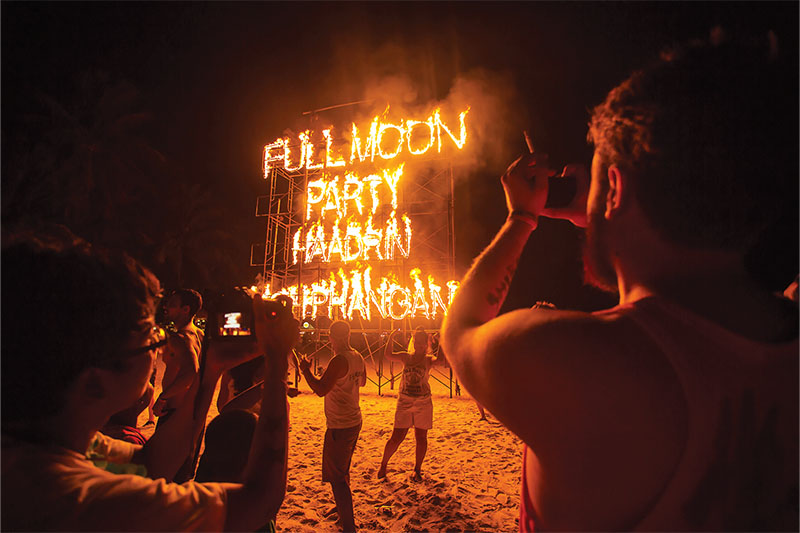
With little artificial lighting available, the bright lunar glow provided a natural spotlight, illuminating the beach well enough for people to dance, talk and linger long into the night. The atmosphere it created half-primitive, half-dreamlike – became inseparable from the experience. The party repeated the following month, and then the next. Each time, more people came. Back in those days where there was no social media, word travelled via dog-eared notebooks, hostel noticeboards and conversations that began with, “Have you heard about this beach in Thailand…?”
By the 1990s, the Full Moon Party had found its groove. It grew slowly but surely. A bar opened here, while a sound system was set up there. Someone painted a sign. Someone else brought speakers. Music diversified as different corners of the beach developed their own personalities. What had started as a farewell became a fixture, and then a phenomenon.
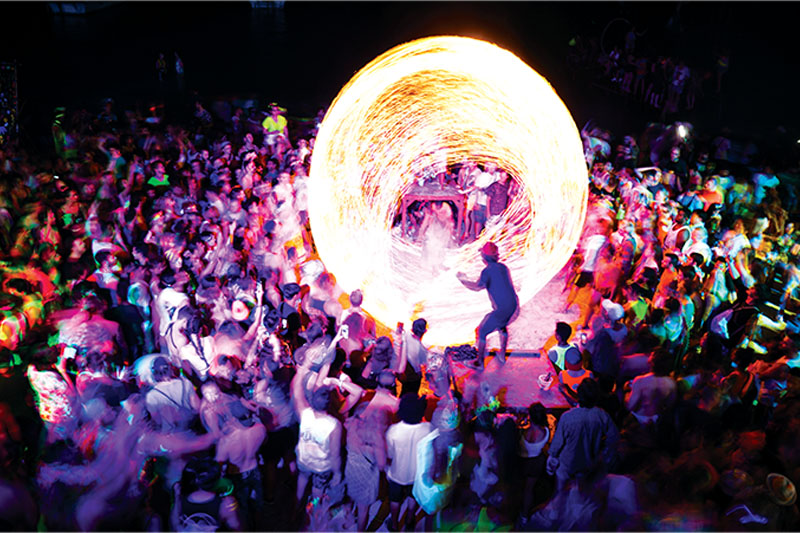
Today, the numbers can be startling. During peak periods, up to 20,000 people can descend on Haad Rin for a single night. The beach bristles with modern lighting rigs and powerful sound systems, projecting electronic beats across the water. And yet, despite the scale, the moon still hangs above it all, quietly reminding everyone that this is not a stadium or a fenced-off field, but a natural shoreline temporarily repurposed.
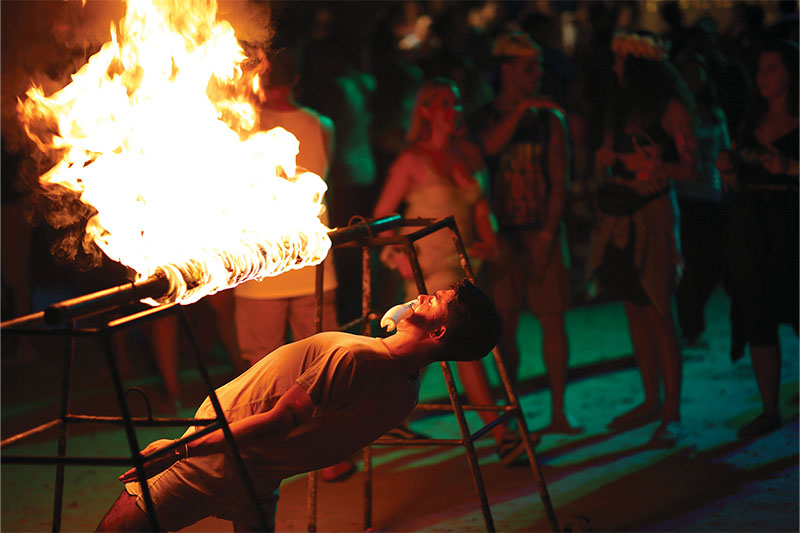
What sets the Full Moon Party apart from many global music festivals is its lack of a single author. Instead of a central organising committee with glossy launch campaigns, it remains a community-driven endeavour shaped by the people who live and work on Haad Rin. Local businesses build temporary bars and stages while DJs and sound system owners bring their own styles and loyal followings. Artists hand-paint signs and fluorescent decorations that glow under ultraviolet light. Food vendors work through the night, keeping the energy levels up as the hours stretch on.
This decentralised structure gives the party its patchwork character. Walk a few metres and the soundtrack changes. One stretch pulses with trance, another leans into house, stroll further along and you’ll find hip-hop or pop anthems engineered for mass singalongs. The beach literally becomes a living mixtape.
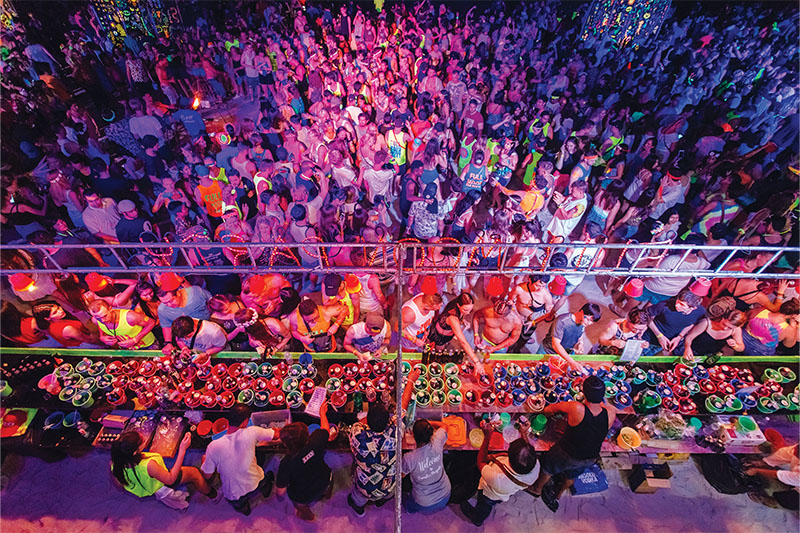
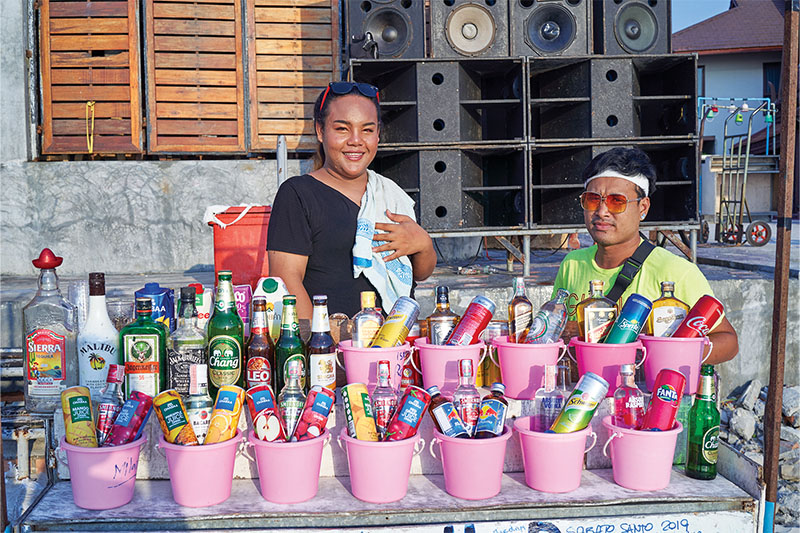
Of course, success has brought complications. The Full Moon Party has long been the subject of debate – about sustainability, safety and the pressures of overtourism on a small island. Local authorities and community groups have worked to address these issues, introducing measures to manage waste, improve transport and reduce harm. The conversation continues, as it must, in any place where popularity collides with fragility.
And yet, for all the scrutiny, the party endures. Perhaps because, at its core, it still offers something elemental. Strip away the neon paint and the amplified sound and you are left with people gathering under a bright moon by the sea-a practice as old as civilisation itself. There is a reason the Full Moon Party has resisted being neatly packaged or fully corporatised. Its appeal lies in its looseness, its refusal to be overly defined.
For first-timers, the experience can feel overwhelming, even surreal. For veterans, it is a familiar cadence, a monthly punctuation mark in island life. For Koh Phangan itself, it is both a calling card and a challenge.
In an age of meticulously curated experiences, the Full Moon Party remains gloriously untidy. It is not perfect, and it does not pretend to be. Instead, it offers a fleeting sense of collective release, framed by moonlight and sea air, that keeps people coming back. The moon rises, the beach fills, and for one night, Haad Rin becomes what it has been for nearly four decades: a gathering point where chance, community and a bit of lunar luck continue to dance together.