Thai Fighting Spirit
Get to know Muay Thai, the art of combat that fought its way around the world
Words: Mimi Grachangnetara
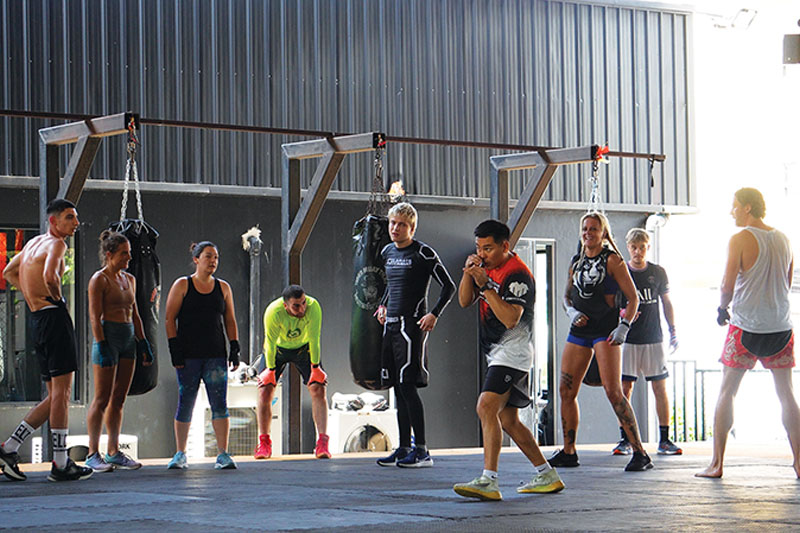
When you step into a Muay Thai gym, it isn’t the clipped bark of trainers-hands wrapped in decades of scar tissue-nor the smack of shin against pad that first catches your attention.
It’s the music.
The ready whine of the pi chawa, the insistent heartbeat of the drums-it sounds ceremonial, ancient, the way old things do. This music announces that what you’re watching isn’t just sport. It comes from a lineage that is unmistakably Thai.
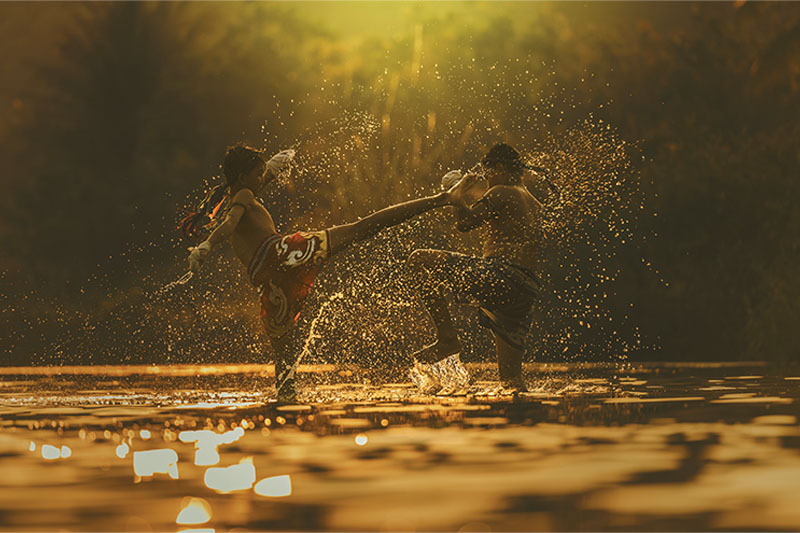
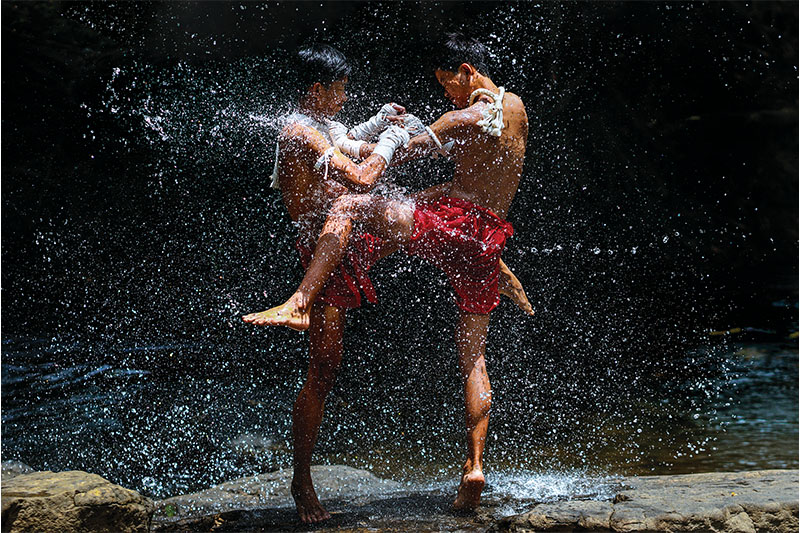
Muay Thai never began with tidy historical chapters or earnest martial-arts manuals. The Thais didn’t refine it in a dojo, and they certainly didn’t codify it with coloured belts. It grew the way real things grow: out of war and necessity, in a landscape where people fought with whatever they had-even if all they had were their elbows and knees.
One of the earliest legends speaks of Phra Chao Suea, a ruler of the Ayutthaya Kingdom so enamoured with fighting that he would sneak out of the palace disguised as a commoner to compete in distant kingdoms-testing himself while learning how ordinary people lived. The man defeated three of the finest fighters of his era. Imaging Charles III slipping out at night to bare-knuckle box in Hackney. Stories like that only come from Thailand, where history is always a little wilder than you expect.
No one knew the identity of this mysterious fighter until word spread that he was, in fact, the King of Ayutthaya. That legend is why February 6 became known as National Muay Thai Day-the date of Phra Chao Suea’s coronation.
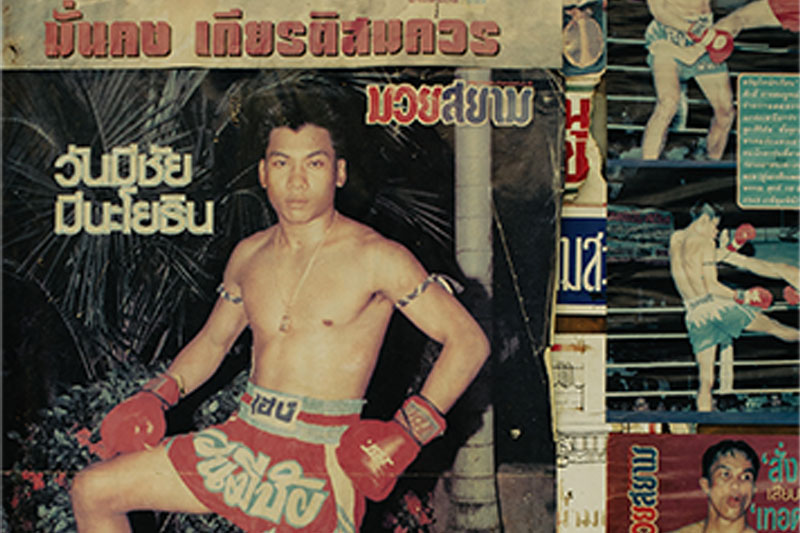
As the kingdom evolved, Muay Thai seeped into temples. Retired warriors entered the monkhood, and monk-often unwittingly-became fight coaches. Villages and markets doubled as training grounds. Picture a small rural temple: chickens scratching outside, incense curling in the air, and inside, a boy learning to kick under the watchful eye of a monk who once commanded troops, counting strikes by candlelight. From that world came a simple truth.
In an environment shaped by conflict, it became necessary to develop an effective form of combat. When soldiers lost their weapons on the battlefield, they were forced to use their bodies as weapons. This was the origin of pahuyuth-bare-handed fighting-the foundation of Muay Thai.
Early Thailand was not peaceful. It did not breed pholosophers in ivory towers. It bred survivors. Historical records from the Sukhothai period-particularly the famous Ramkhamhaeng Inscription-mention “those skilled in the arts of combat.” They never say “Muay Thai” outright, but the implications are unmistakable. Old legal codes such as the Three Seals Law refer to fighters using bare hands and to rewards for martial skill. Ayutthaya-era chronicles introduce one of the first international Muay Thai legends: Nai Khanom Tom, the warrior who defeated multiple Burmese fighters and became a folk hero.
Muay Thai Day is celebrated every year on March 17 to honour Nai Khanom Tom, commemorating his bravery in defeating ten Burmese fighters in 1774 to win his freedom.
Yet Muay Thai was always as spiritual as it was physical. Fighters learned through a strict teacher-student lineage rooted in respect, humility, ritual, and moral code. Before gloves and television broadcasts, it was closer to religion than sport.
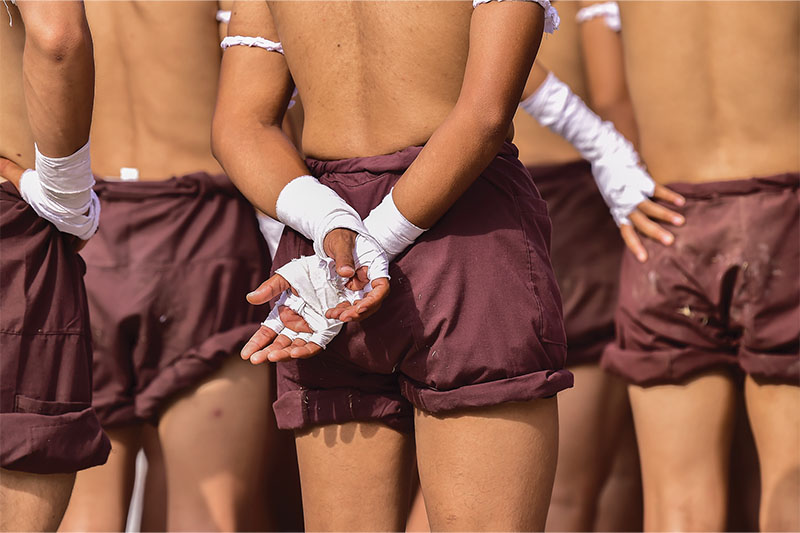
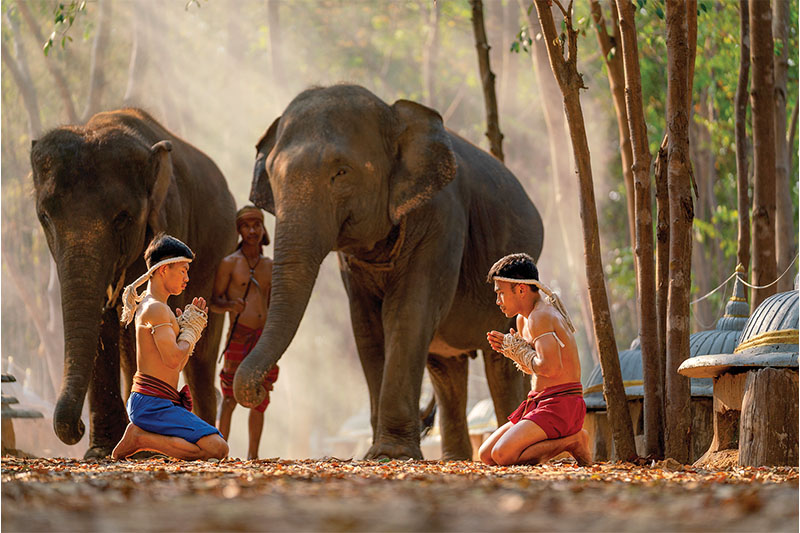
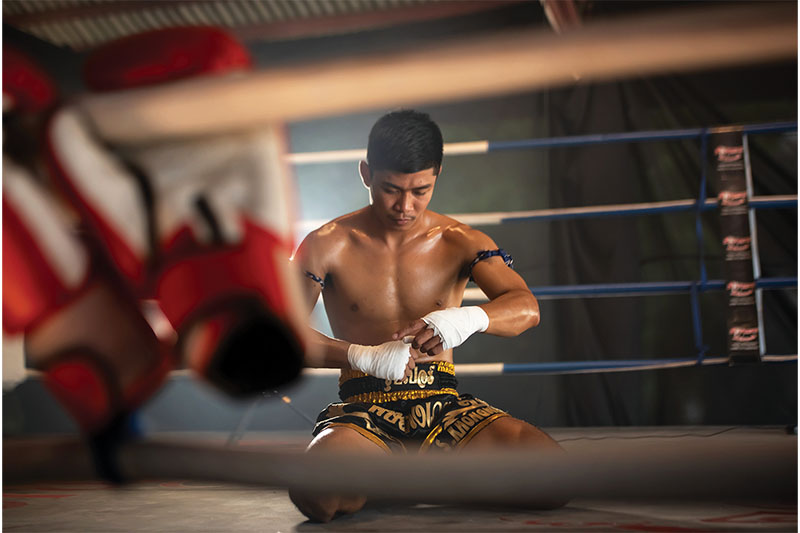
The traditions include the wai kru ceremony, which honoured teachers and was conducted to seek protection. The mongkhon headband and pra jiad armbands, symbols of fortune and protection, often blessed by monks, or cut from a mother’s sarong were also part of the ritual, as well as mantras and charms which were believed to guard fighters from harm. To outsiders, these practices may seem superstitious, but to Thais, they are simply threads woven into daily life.
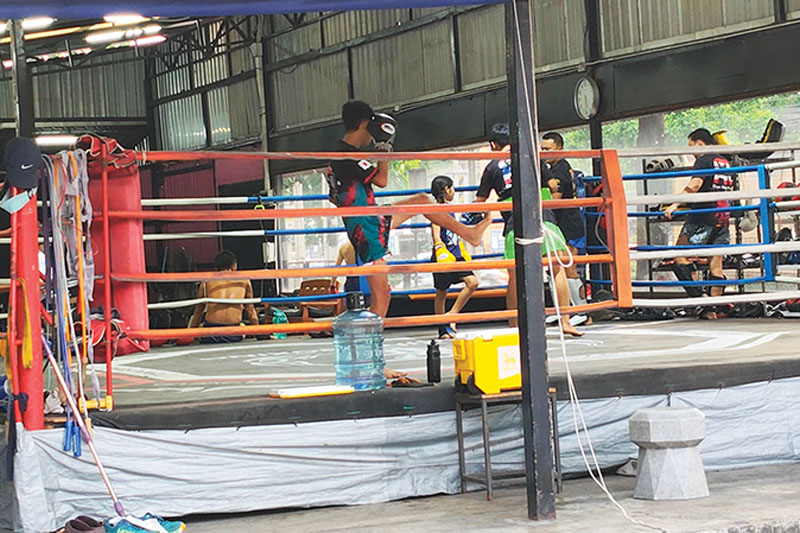
Rattanakosin: Muay Thai Enters the Court
With the founding of the Rattanakosin era in 1782, Muay Thai underwent its first major transformation. King Rama I sought to revive Thai culture after the fall of Ayutthaya, and Muay Thai became part of that cultural reconstruction.
Fighting became a ceremony, spectacle, and national pride. Major royal events—coronations, Katin ceremonies, Songkran—featured formal Muay Thai bouts. The monarchy created ranks and titles for elite fighters; some were appointed royal guards.
This era produced legends including Khun Phaen Din Thin of Supanburi, famed for razor-sharp elbows and knees; Nen Thep of Lopburi, a master of evasive footwork; Pai Sing of Chainat, whose punches and kicks shaped a generation.
Cities developed camps with distinct identities. Some emphasised refined technique, others sheer power. At Wat Sutat, training was punishing. At palace camps, etiquette mattered almost as much as victory.
Music became inseparable from the fight. The pi chawa, ching, and klong khaek didn’t merely accompany the action but guided it. As the pace quickened, so did the rhythm. When fighters paused, the music softened, coaxing them toward the next exchange.
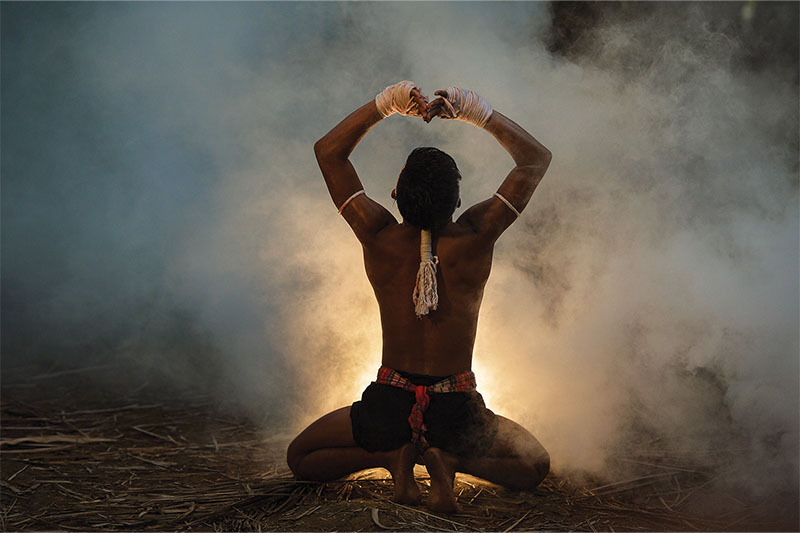
Modernisation Under Rama V-VI
As King Chulalongkorn (Rama V) modernised Siam to survive the colonial era, Muay Thai adapted alongside it.
Rules were introduced as were weight classes, timed rounds, neutral referees, standardised rope ring, and early fighter records.
The kingdom opened to foreign influence. Thai fighters faced Burmese, Khmer, and Chinese opponents. Western boxing techniques filtered into training. Promoters borrowed marketing ideas from abroad. Muay Thai was evolving— still Thai, but increasingly global.
Under King Vajiravudh (Rama VI), Muay Thai became a symbol of national pride. The construction of Ratchadamnoen Stadium in 1921 set a new standard. Designed by an Italian architect and built of reinforced concrete, with electric lighting and ventilation, it was the first modern Muay Thai arena.
Its 8,000 seats were arranged by social class, from aristocrats to labourers. Muay Thai was, for once, everyone’s sport.
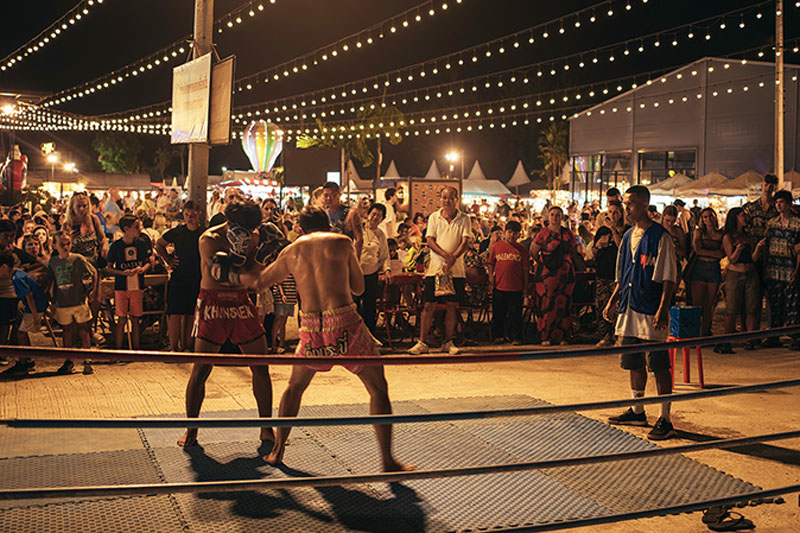
War, Americans, and The Global Breakout
World War II and the Vietnam War unexpectedly propelled Muay Thai onto the world stage. American soldiers stationed in Thailand learned the sport and carried it home. Thai trainers travelled overseas. Camps opened in Silom and Bang Kapi specifically for foreigners.
By the 1980s and ’90s, Europe had embraced Muay Thai. The Dutch, in particular, merged it with their kickboxing traditions, producing fighters capable of standing toe-to-toe with Thais. Japan, Korea, and China followed. Australia committed fully—its fighters now rank among the world’s best.
In 1993, the creation of the International Federation of Muaythai Associations (IFMA) finally gave the sport a unified global governing body. Standardised rules, international tournaments, and world championships followed.
Muay Thai was no longer only Thailand’s treasure, but it was also becoming the world’s.
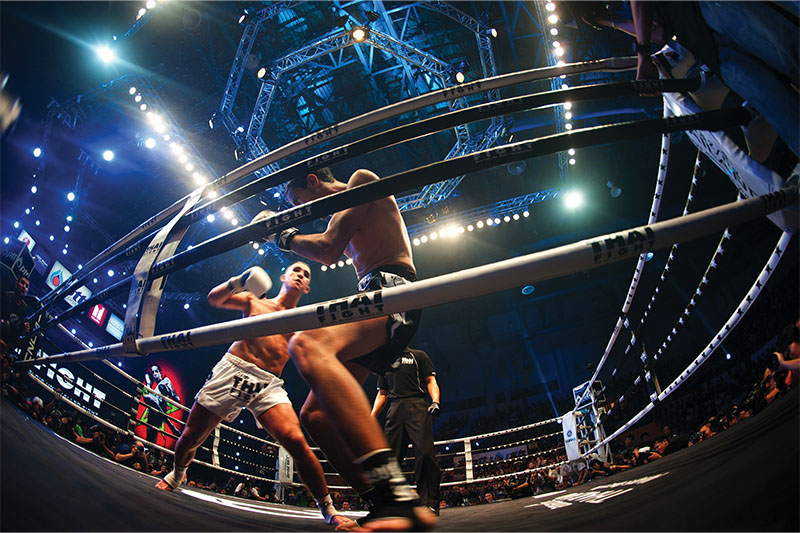
Muay Thai Today
In the 21st century, Muay Thai is both cultural emblem and economic engine. Tourist camps flourish from Chiang Mai to Phuket, generating billions of baht. Cultural performances appear in theatres and festivals. Curated Muay Thai travel itineraries take visitors
to historic gyms, ringside seats at Lumpinee, and villages steeped in the sport’s mythology.
As Thailand embraces soft power as national strategy, Muay Thai sits at its centre—its clearest, most recognisable cultural export. Like kung fu to China or judo to Japan, Muay Thai is both identity and diplomacy.
Tracing its journey—from battlefield survival technique to glittering global sport—reveals something deeper than footwork and clinches. Muay Thai mirrors more than 700 years of Thai society: its wars, monarchs, rituals, modernisation, anxieties, and ambitions.
This history isn’t nostalgic. It’s functional. Muay Thai has always adapted when Thailand adapted-without losing its heart.
That is the lesson.
Muay Thai shows how a fiercely local tradition can survive the shockwaves of globalisation without diluting itself. How a small nation can wield culture, not weaponry, as soft power. How identity can be preserved, exported, and celebrated.
Like the music that opens each bout, the story of Muay Thai has a quiet pull. It traces a line from battlefield to stadium, from monk to fighter, and from Thailand to the world. Today, the art continues its fight—not to survive, but also to stay true in today’s modern world. As it pushes back against becoming spectacle alone, Thailand’s national sport remains anchored in ritual, respect, and memory, and you’ll find that in every wai kru and every strike, history remains present.
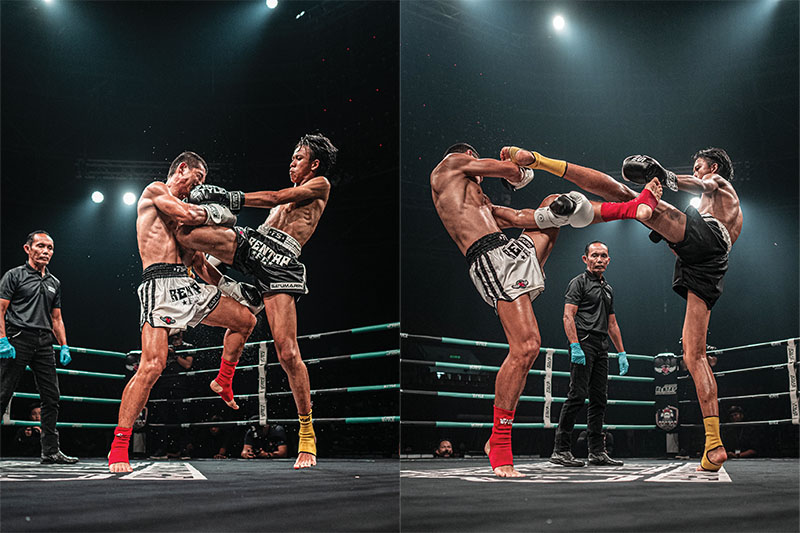
Live Fight Night Tips
Right in the thick of Chaweng sits Phet Buncha Boxing Stadium, the island’s oldest and best-known Muay Thai arena. For decades, the venue has been the beating heart of Samui’s fight scene, drawing seasoned fans alongside first- time visitors. The atmosphere is loud and raw and if you want to see the sport up close, this is the place to take a seat.
General Contact Notes
For many gyms mentioned, the best way to get exact schedules, pricing, and training package details is to visit their website or call/ WhatsApp ahead (most provide contact info on Google Business or their official sites). Most coaches also speak English and can tailor training plans to your level.
Top Muay Thai Camps & Gyms on Samui
PUNCH IT GYM – PREMIUM TRAINING DESTINATION
One of Samui’s most popular Muay Thai camps, with a strong reputation for authentic Thai-style pad work, sparring, and conditioning.
Good for: All levels, fight preparation, foreigners who want structured training. punchitgym.com
FAS MUAY THAI BOXING GYM – HIGHLY RATED LOCAL GYM
Excellent reviews and a solid choice if you want intense Muay Thai training with experienced coaches. Known for high-energy sessions and friendly atmosphere.
Good for: Fitness + Muay Thai blend. fasmuaythaigym.com
JUN MUAY THAI
Authentic Muay Thai Experience Smaller, highly rated gym in Lamai with solid local training vibes; reviewers praise the pad work, sparring, and close attention from trainers.
Good for: Authentic feel and focused training. junmuaythai.com
YODYUT MUAYTHAI
Traditional Training Spot Strong local reputation for Muay Thai fundamentals, pad work, and sparring. Often recommended for those who want a more traditional, less touristy training vibe.
Good for: Technique + consistent sparring. yodyutmuaythai.com
SUPERPROSAMUI
Gym + Muay Thai + Fitness A large resort-style Muay Thai, MMA, and fitness camp. Offers classes for all levels and flexible package options.
Good for: Variety of combat sports and training options. superprosamui.com
CHOR.RATCHAWAT MUAY THAI BOPHUT
Local Community Gym Friendly gym with great reviews and personal attention.
Good option if you want a community vibe with strong traditional training. ratchawatmuaythai.com
P.M PAYU MUAYTHAI GYM
Boutique Muay Thai Gym Smaller, highly rated gym focusing on basics, technique,
and personalised training. Works well for beginners and intermediate students. pmpayumuaythai.com
DOCK & KITTI MUAY THAI
Intensely Focused Training Smaller gym with excellent reviews, intimate atmosphere, and strong trainer attention—great for pad work, clinch, and sparring. dock-and-kitti-muay-thai-gym.com
CHATPICHIT MUAY THAI GYM
Lamai Training Option Highly rated local gym known for quality sessions and friendly coaches—good for technique-focused training without large crowds.